Disclaimer: BatchDialer is designed to support responsible outreach. However, customers should still take necessary steps to ensure their cold outreach complies with applicable laws and obtain any required permissions.
| Quick Answer: To leave voicemails that generate more callbacks, keep your pitch short, make your opening count, personalize your message, highlight your value proposition, and include a clear call-to-action (CTA). Using BatchDialer’s Voicemail Drop feature can also save you time by letting you leave a pre-recorded message instead of recording a new one for each call. |
When a cold call goes to voicemail, you still have a chance to win over the prospect. It’s all in the message you leave. Many cold callers leave generic messages that get ignored. However, by following some best practices, you can boost your callback rate.
Read on to learn more.
Key Takeaways:
- Lead with your reason for calling. Skip the lengthy intro and get straight to why you’re reaching out, or risk losing the prospect in the first few seconds.
- Personalize your message and value proposition to show prospects how calling you back benefits them, rather than making the voicemail all about you.
- Keep it short with a single, clear call to action so prospects know exactly what to do next, without confusion or decision fatigue.
When to Leave a Voicemail vs. Try Calling Again Later

You should leave a voicemail after every cold call, unless you’ve already left a few with no response. At some point, prospects who don’t engage may simply not be interested, making another voicemail effort not worth it.
5 Voicemail Tips
To optimize your voicemails and increase callbacks, follow these best practices:
Make Your Opening Count
The first few seconds of your voicemail matter most. After all, if you lose the recipient’s interest in the first few seconds, it may not matter what you say next since they’re likely to hang up.
To make your opening count, say why you’re calling to immediately dive into what your offer is. Too many agents start by introducing themselves and their organization, which wastes valuable time and may even turn people off who don’t want to be sold to.
Personalize Your Message

Address the prospect directly by saying their name and mentioning anything particular to their situation. For example, if you know they’re behind on their mortgage payments, delicately mention how you’ve worked with homeowners in similar situations and may be able to help.
Your voicemail is more likely to resonate with prospects when they feel seen and understood.
Highlight Your Value Proposition
If your voicemail is all about you and what you do, it’s unlikely to pique the prospect’s interest. Instead, give them a reason to keep listening. For instance, lead by explaining how you can help them escape a tough financial situation without credit damage or equity loss.
The goal of the voicemail is to show how calling you back can actually benefit them.
Leave a Clear Call to Action (CTA)
End your voicemail by explaining clearly what to do next. In most cases, this means reciting your phone number and inviting the prospect to call you. However, you could also point them to a follow-up email you send, so they can respond there.
The point is you need to give them one clear CTA to avoid unnecessary confusion and lost opportunities.
Keep It Short
Finally, be brief. Your prospect likely doesn’t have time to listen to a long voicemail.
Aim for roughly 20–30 seconds. Shorter voicemails are more likely to be heard in full and make it easier for prospects to remember your reason for calling and callback number.
Sample Voicemail Scripts
To give you some ideas for what to say, here are some sample voicemail scripts for different types of prospects:
FSBO Script
“Hi [Prospect Name], I noticed your home on [Street Name] is listed for sale by owner. I work with sellers in [Area] and can share a few things that might help you sell faster and net more money, no obligation. Give me a call back at [Phone Number]. This is [Your Name], by the way.”
Pre-Foreclosure Script
“Hi [Prospect Name], I understand things may be tight right now, and I’ve helped homeowners in similar situations find options to avoid foreclosure without damaging their credit. If you’d like to hear your options, call me back at [Phone Number]. My name’s [Your Name]. Happy to help.”
Absentee Owner Script
“Hi [Prospect Name], I work with owners of rental properties in [Area], including out-of-state owners, and I wanted to see if you’re considering selling [Property Address] given today’s market. I can walk you through your options. Just call me at [Phone Number] when you get a chance. My name is [Your Name].”
Tax Delinquency Script
“Hi [Prospect Name], I saw that [Property Address] has some back taxes owed, and I’ve helped owners in similar situations resolve that and avoid further penalties. I’d love to explain your options. My name is [Your Name]. Give me a call back at [Your Number].”
Common Mistakes to Avoid
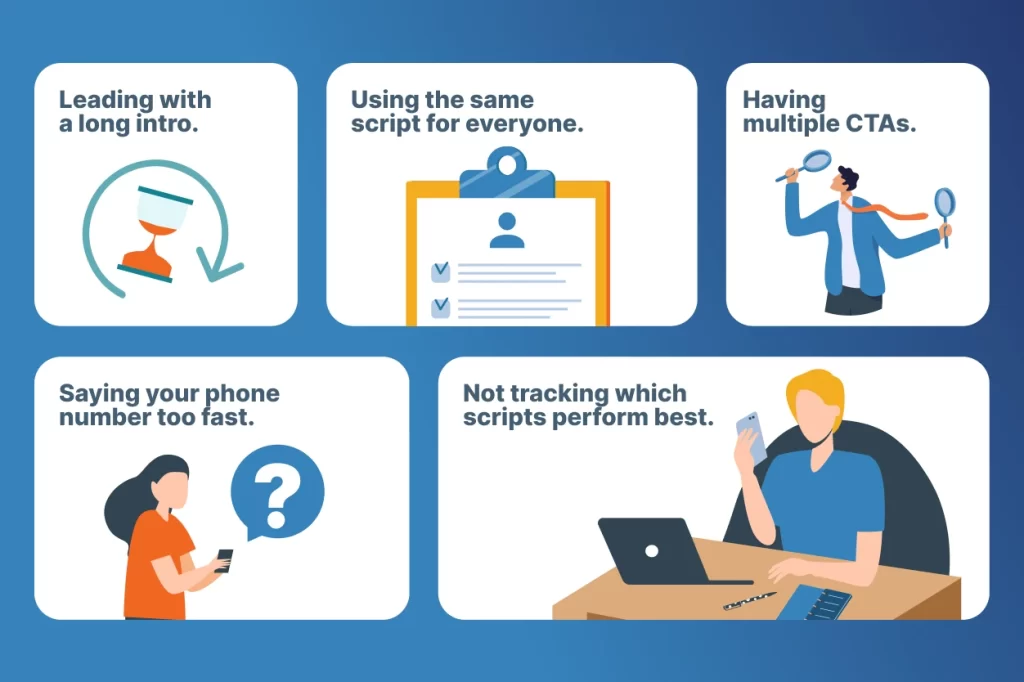
Whatever you do, avoid these common pitfalls when leaving a voicemail:
- Leading with a long intro. Spending the first 10 seconds on your name, company, and pleasantries can cause prospects to stop listening before you ever get to your offer.
- Using the same script for everyone. If you repeat the same message to every prospect, you can’t personalize your message.
- Having multiple CTAs. Giving the prospect several options to get in touch (call, text, email, etc.) can cause decision fatigue and lead them to avoid contacting you altogether.
- Saying your phone number too fast. Rushing through the callback number can make it harder for the prospect to write it down and remember.
- Not tracking which scripts perform best. You can’t improve what you don’t measure. Track how different scripts perform and adjust your voicemail strategy accordingly.
Automate Your Voicemails with BatchDialer
To save time leaving voicemails, use BatchDialer’s Voicemail Drop feature. It lets you leave pre-recorded messages so you don’t have to record a new one for every call. Of course, you may want to pre-record multiple voicemails for different lead types to keep them personalized.
Ultimately, creating voicemails that produce more callbacks will require some trial and error. However, you can improve their performance faster by following the tips in this guide.
Start by leaving pre-recorded voicemails through your custom call results. This can streamline your workflow while delivering a consistent, professional message across every call.
Start your 7-day free trial now!
Frequently Asked Questions (FAQs)
How do you leave a voicemail that gets a callback?
Focus on a strong opening that states why you’re calling, personalize the message to the prospect’s situation, highlight your value proposition, and end with one clear call to action.
What should a good voicemail script include?
An effective voicemail script should open with your reason for calling, reference something specific to the prospect, explain how you can help them, and close with a clear call to action and callback number.
How is a cold calling voicemail different from other voicemails?
A cold calling voicemail needs to work harder to earn a callback since the prospect doesn’t know you. That means getting to the point quickly, personalizing the message, and clearly showing the value of calling back.
What makes a real estate voicemail effective?
An effective real estate voicemail speaks directly to the prospect’s property situation and shows how you can help, rather than opening with a generic sales pitch.
What is a pre-recorded voicemail?
A pre-recorded voicemail is a message you record in advance and leave automatically when a call goes to voicemail, so you don’t have to record a new message for every call.
What are voicemail drops?
Voicemail drops are a feature that lets you leave pre-recorded voicemails, helping you reach more prospects in less time.