Disclaimer: BatchDialer is designed to support responsible outreach. However, customers should still take necessary steps to ensure their cold outreach complies with applicable laws and obtain any required permissions.
Key Takeaways:
- Pre-foreclosure homeowners are often in financial distress, so leading with empathy (not your offer) is the key to keeping them on the phone.
- Success requires more than a good pitch. It takes proper research, call timing, documentation, and follow-up.
- Compliance isn’t optional. Following TCPA rules, respecting DNC restrictions, and rotating through numbers can protect you from fines and spam flags.
Pre-foreclosure properties can be great leads for real estate investing. However, you must approach the homeowners with tact. Otherwise, you risk losing the deal, leaving a bad impression, and hurting your long-term reputation.
Why Pre-Foreclosure Leads Require a Different Approach
Pre-foreclosure is the period after a homeowner has defaulted on their mortgage (typically after three consecutive missed payments), but before a foreclosure sale. The homeowner still owns the property, but if they don’t catch up on payments, they risk losing it.
Consequently, pre-foreclosure property owners are often in financial distress. They may be worried about losing their home, the credit damage and potential equity loss, and finding a new place to live. That’s why you must be sensitive when you approach them with an offer. Otherwise, you could come off as unsympathetic or judgmental, which can be a major turn-off.
Common Mistakes Before Dialing

Before picking up the phone to call a pre-foreclosure lead, avoid these common pitfalls:
Poor Lead List Hygiene
Do your best to ensure your pre-foreclosure lead list (which you can get from real estate data platforms like PropStream) doesn’t contain duplicate leads, prospects who’ve already resolved their pre-foreclosure status, or wrong or outdated phone numbers. That way, you’re not wasting time calling people who don’t need what you have to offer.
Skipping Property-Level Research
Before each call, research how far behind the owner is on their mortgage, who the lender is, and the next steps in the foreclosure process—all information available in public records (and aggregation platforms like PropStream). This can give you more context before each call.
If a prospect asks where you got the information, politely explain that ownership information and foreclosure notices are public record (but accept if they still want you to respect their privacy).
Calling Too Soon or Too Late
Reaching out to a homeowner right after they receive a notice of default can feel predatory. They may not be ready to entertain selling options. At the same time, waiting too long can mean letting another investor beat you to the opportunity. Find the right balance for your market.
Common Mistakes During the Conversation

Once you’re on the phone with a pre-foreclosure lead, steer clear of these common mistakes:
Leading with the Pitch
Opening with your offer to buy the house is often considered bad form because it can feel cold and transactional. Instead, acknowledge and express sympathy for the prospect’s situation. This way, they’re more likely to be open and listen to what you have to offer.
Using High-Pressure Sales Tactics
Don’t imply that selling to you is the only way the prospect can avoid foreclosure or that they must act now. Such high-pressure sales tactics are unethical and likely counterproductive since many homeowners don’t like being pressured.
Not Addressing the Real Problem
It’s easy to assume a pre-foreclosure prospect just needs more money, but that may be ignoring their underlying problem. For example, they may be dealing with divorce, a death, a job loss, or health issues. Get to the heart of the issue so you know how best to help.
Pro Tip: To navigate sensitive pre-foreclosure conversations, use a proven script. Check out some sample scripts in our article on the subject.
Common Mistakes After the Call
Your work isn’t done after hanging up the phone. Avoid these post-call mistakes:
Not Documenting the Conversation
As soon as a call ends, log the prospect’s interest level, foreclosure timeline, concerns, and family situation so you don’t have to start from scratch on the next call. BatchDialer makes this easy by automatically labeling calls based on how the conversation went and giving you an AI-generated call summary for easy reference later.
Forgetting to Send Promised Information
If, during the call, you promised to send the prospect a formal offer or information on their local market, foreclosure process, or home value, follow through. Failing to deliver on these promises can ruin your reputation and make it harder to close deals.
Giving Up After One Call Attempt
Most pre-foreclosure homeowners don’t say yes on the first call. You must follow up. In fact, some research suggests it takes an average of 8 interactions to start a conversation. So don’t give up after the first attempt!
Common Compliance Mistakes
Concept: A CRM or dialer screen displaying a lead with a prominent DNC badge and a “Do Not Call” warning before the call button. ( Can use BatchDialer dashboard reference)
Some pre-foreclosure cold calling mistakes can get you into regulatory trouble. Avoid these:
Calling Outside 8 a.m. to 9 p.m. Local Time
The Telephone Consumer Protection Act (TCPA) prohibits you from cold calling anyone between 8:00 a.m. and 9:00 p.m. in their time zone. If you do, you could face hefty fines.
Calling Numbers on the Do-Not-Call List
The Federal Trade Commission (FTC) maintains a do-not-call (DNC) registry of people who don’t want unsolicited phone calls. Always check your pre-foreclosure lead lists against the DNC registry to ensure you’re compliant. Otherwise, you could face fines of up to $43,792 per call.
Making a Lot of Calls from the Same Number
It’s not just government regulations you need to worry about. Phone carriers often flag numbers as “spam” when they detect unusual calling behavior, which dramatically reduces the likelihood that a prospect will answer. You can often avoid spam flags by rotating through different numbers. BatchDialer does this automatically to help you maintain a good number reputation.
Pro Tip: BatchDialer also has a local presence ID feature that automatically matches your phone number to the prospect’s area code, so they’re more likely to pick up.
Pre-Foreclosure Cold Calling Checklist
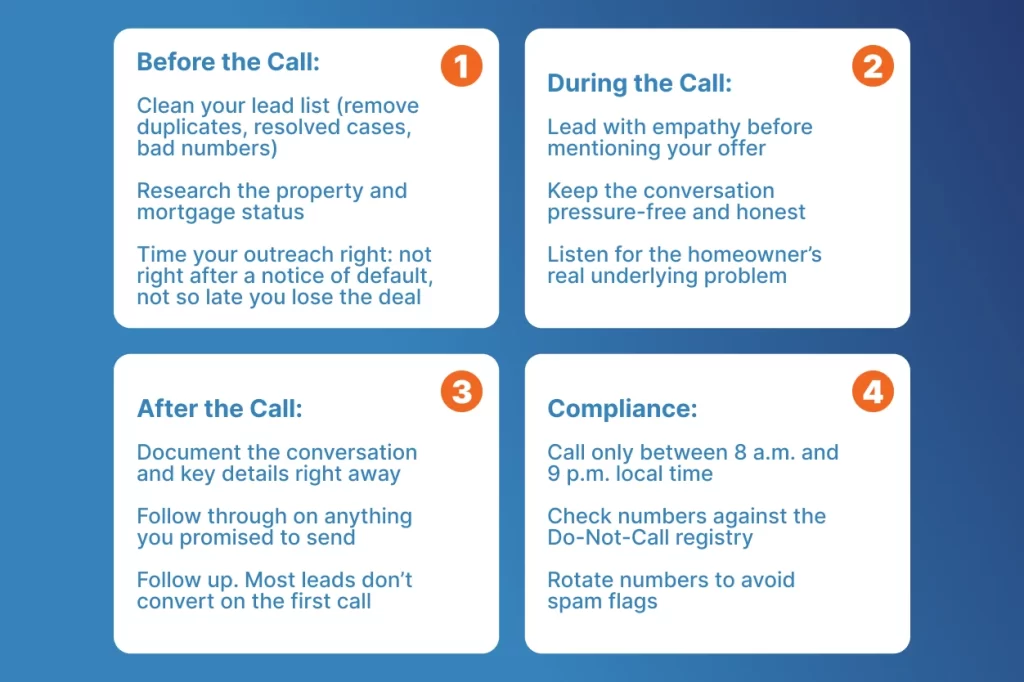
Now that we’ve covered the most common mistakes to avoid, here’s what to do instead, condensed into a handy checklist that you can review before each call:
Before the Call
☐ Clean your lead list (remove duplicates, resolved cases, bad numbers)
☐ Research the property and mortgage status
☐ Time your outreach right: not right after a notice of default, not so late you lose the deal
During the Call
☐ Lead with empathy before mentioning your offer
☐ Keep the conversation pressure-free and honest
☐ Listen for the homeowner’s real underlying problem
After the Call
☐ Document the conversation and key details right away
☐ Follow through on anything you promised to send
☐ Follow up. Most leads don’t convert on the first call
Compliance
☐ Call only between 8 a.m. and 9 p.m. local time
☐ Check numbers against the Do-Not-Call registry
☐ Rotate numbers to avoid spam flags
Start Cold Calling Pre-Foreclosure Leads the Right Way
Ultimately, successful pre-foreclosure cold calls come down to empathy, preparation, and consistency. When you avoid common mistakes, you inevitably tend to see higher response and conversion rates. Launch your next pre-foreclosure calling campaign today with BatchDialer!
Start your 7-day free trial now!
Frequently Asked Questions (FAQs)
What are pre-foreclosures, and why do some investors focus on them?
Pre-foreclosures are properties where the homeowner has defaulted on their mortgage but the home hasn’t yet been sold at auction. Some investors focus on them because the owner is often motivated to sell quickly, but it’s important to approach these sellers with sensitivity.
Is cold calling pre-foreclosure homeowners legal?
Yes, as long as you follow cold calling regulations, such as calling only between 8 a.m. and 9 p.m. in the owner’s local time zone and checking numbers against the Do-Not-Call registry.
What’s the best way to start a call with pre-foreclosure leads?
Rather than opening with your offer, acknowledge their situation with genuine empathy first. Homeowners are more receptive once they feel understood rather than sold to.
How do I find pre-foreclosure leads?
Real estate data platforms like PropStream aggregate public records, including notices of default and foreclosure filings, into searchable lead lists, so you can identify pre-foreclosure sellers before your competitors do.