
Get a summary of this article with your favorite AI:
Disclaimer: BatchDialer is designed to support responsible outreach, and customers should ensure their cold outreach complies with applicable laws and obtain any required permissions.
Key Takeaways:
- Cold calling success in real estate requires focusing on the right prospects with personalized messaging, not just making more calls.
- A modern dialer system like BatchDialer can multiply your productivity by automating dialing, avoiding spam labels, and keeping you compliant with telemarketing regulations.
- Pairing lead generation platforms like PropStream with calling systems can create a complete outbound marketing workflow that turns aggregated property data into closed deals.
Cold calling is a numbers game. The more people you call, the more likely you are to win a new client or deal. However, in real estate, you can dramatically improve your success rate by knowing exactly who to call and what to say.
In this guide, we’ll explain how to build a complete cold calling system from scratch, one that turns aggregated property data into actual conversations and revenue for your business. Whether you’re a real estate agent or investor, this article is for you.
What Is Cold Calling?
Cold calling is the practice of contacting (via phone) prospects with whom you have no prior relationship. It’s called “cold” calling because the leads are cold as opposed to warm, meaning they’re not familiar with you or your service and therefore aren’t expecting a call from you.
Naturally, finding interested leads via cold calling can be challenging. Many prospects don’t pick up the phone because they don’t recognize your phone number, or worse, because it was labeled as potential spam by phone carriers. Even when you do get someone on the phone, many won’t be interested, leading to repeated rejections that can wear on you over time.
Despite this, cold calling remains a tried-and-true method for landing real estate deals and contracts, especially when you know how to qualify leads up front. When done right, cold calling can be one of the most low-barrier, cost-effective ways to grow your business.
Why It Matters for Real Estate Agents and Investors
As a real estate agent, you’re constantly seeking new clients. After all, homeowners only move about every eight years, so you can’t rely on repeat business alone. The more new clients you find, the more you tend to earn. Cold calling is one reliable way to find work, no matter how advanced you are in your career. All it takes is the right data and some persistence.
Similarly, investors can cold call homeowners to lock in off-market deals at below-market prices. While most buyers browse public home listings, savvy investors quietly reach out to owners who’ve yet to list their homes but may be interested in a deal. The key is to identify potential selling motivations early and then make an offer before the home ever hits the market.
How to Build a Complete Cold Calling System
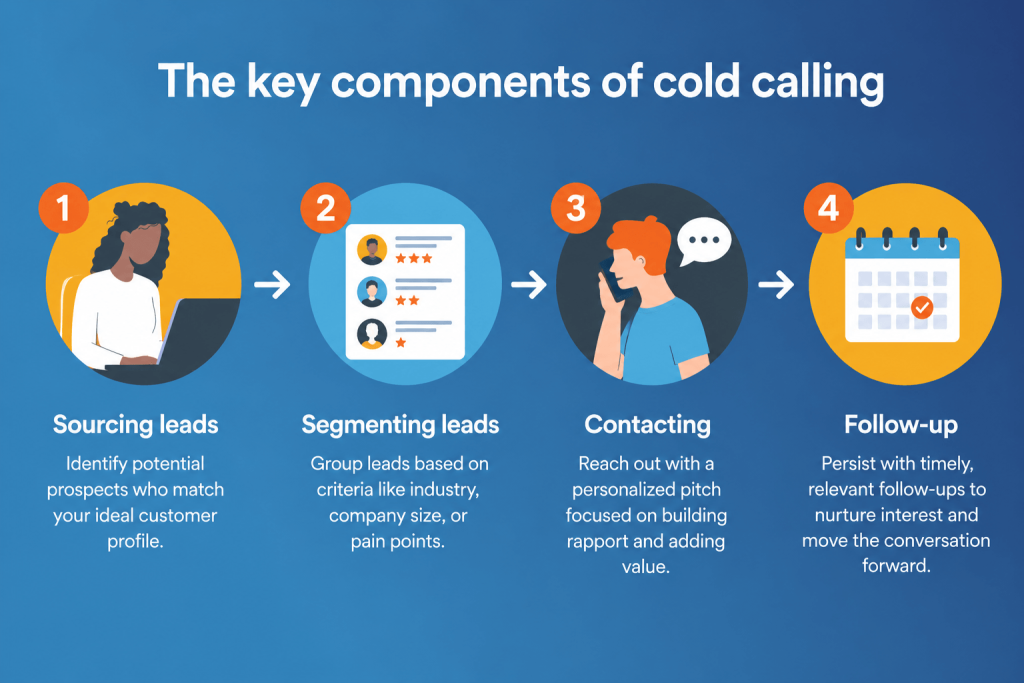
Now that you know what cold calling is and why it still works in real estate, let’s break down the basic steps of any cold calling workflow.
1. Sourcing Leads
First, you must identify prospects to call. Don’t just dial random numbers; it is both ineffective and potentially illegal. For instance, calling numbers that were randomly or sequentially generated without the call recipient’s express written consent violates the Telephone Consumer Protection Act (TCPA).
Instead, identify leads most likely to be interested in your offer based on specific characteristics. For example, agents could focus on elderly homeowners with large homes who may be interested in downsizing. As an investor, you may focus on distressed homeowners for whom a home sale would be a financial relief.
Once you’ve settled on the type(s) of leads you’ll focus on, it’s time to identify them. While you could do this manually by scouring public records, there’s a better way.
PropStream aggregates data from the multiple listing service (MLS), public records, and other sources and makes it searchable. All you have to do is choose a target market and apply relevant search filters from over 165 filter options. The platform will then provide you with a list of properties and homeowners that meet your search criteria, along with valuable information such as estimated market value, equity level, ownership duration, and more.
2. Segmenting Leads
Next, segment your leads. This means grouping them based on shared characteristics. For example, you might group leads by home value ($ 500,000+), homeownership duration (over 30 years), and foreclosure status.
The goal is to keep similar leads together so that when you call, you can focus on one lead type at a time and tailor your message to their specific needs. Otherwise, you may have to switch between different types of leads from one call to the next.
As you contact leads (more on this next), you can also segment them based on call results. For instance, BatchDialer automatically applies post-call tags such as “no answer,” “do not call,” and “follow up” to group leads at similar stages of your sales funnel.
3. Contacting Leads
With a segmented lead list, you’re ready to start making calls. This is when you actually talk to leads and pitch your services. Since every prospect is unique, it’s important to learn their homeownership situation and personalize your offer accordingly.
Imagine you’re an investor calling a homeowner you know has a foreclosure filing. You might introduce yourself as a local investor who can facilitate quick, all-cash home sales, allowing homeowners to avoid foreclosure and the resulting credit damage. While the homeowner may not be interested, they’re far more likely to accept a tailored offer than a generic bid to buy.
Of course, manually dialing numbers one at a time can be time-consuming. To speed up the process, many real estate professionals use a dialing platform like BatchDialer, which lets you dial up to five numbers simultaneously and routes answered calls to available agents.
4. Following up With Leads
According to RAIN Group, it takes an average of eight interactions with a prospect before they’ll agree to a meeting. This is why it’s crucial to always follow up. If you give up on a prospect after one or two call attempts, you could be leaving money on the table.
That said, you need a reliable follow-up system. Otherwise, you’re bound to let leads fall through the cracks. The easiest way to keep track of leads is with a real estate dialer like BatchDialer. Once you upload a lead into the system, it’s saved and tracked indefinitely. Whether the lead is moved to a “follow up” or “not interested” list, you’ll have reliable data to organize future follow-up campaigns.
Ultimately, this is how you optimize your cold calling efforts. Carefully qualify and segment each lead, call them, leave detailed notes and tags, and then follow up accordingly.
Dialing Modes
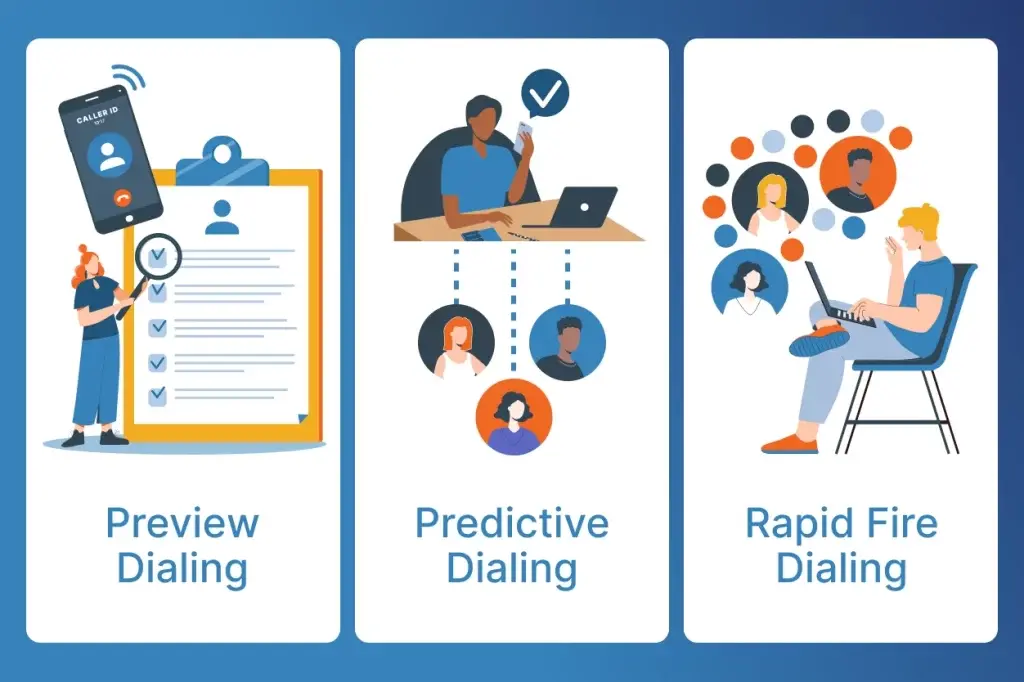
For the best cold calling results, you must use the right dialing mode at the right time. Below, we’ll cover the three main dialing modes and when to use each.
1. Preview Dialing
Preview dialing is when you call one prospect at a time and preview any contact information, property details, notes, etc., before placing the call. It’s ideal for sensitive or critical conversations with prospects who may require special attention.
While preview dialing is the slowest dialing mode, it allows you to get a firm understanding of a prospect’s situation before getting on a call. This helps you avoid redundant talking points and misspeaking in a way that could cost you a deal or client.
BatchDialer’s preview dialing mode lets you review all of the following before dialing the number (or moving on to the next lead):
- Lead information
- Property Details
- Activities
- Notes
- Lead Sheets (only applicable if admin has set up in settings)
- Your Script (Admins can provide these when creating the campaign)
2. Predictive Dialing
Predictive dialing is when you dial multiple phone numbers simultaneously, and the dialer automatically connects you to whichever call is answered first. This is ideal for high-volume cold calling campaigns that prioritize speed over personalization.
While predictive dialing comes with a higher risk of dropped calls (e.g., if two prospects answer simultaneously and you can’t answer both), BatchDialer minimizes this risk by allowing you to pace calls according to agent availability.
In addition to displaying the same prospect information as in preview dialing, BatchDialer’s predictive dialing mode shows which campaigns each contact has already been dialed under. This gives you a comprehensive view of each lead, even if you have less time to review it.
3. Rapid Fire Dialing
Rapid fire dialing is a variation of predictive, multi-line dialing that lets the dialer automatically fire off another outbound call as soon as a new line becomes available. This can reduce agent wait time by 23%, making it ideal for your highest volume campaigns.
For example, imagine you’ve set your predictive dialer to call three lines simultaneously. Normally, the system would wait till all three dial attempts are complete before dialing another set of three numbers. Under rapid fire dialing, if one dial attempt fails, the system automatically starts dialing the next number on your list, so you always have three active dials going at once.
Note: Rapid fire dialing is only available on BatchDialer’s advanced plans.
How to Transition From Manual Dialing to Automated Systems

Let’s say you’re a real estate agent or investor who still makes cold calls manually. Graduating to a scalable dialing system can be an exciting but challenging prospect.
Here’s what to do:
Step 1: Audit your current cold calling process. How are you sourcing, segmenting, contacting, and following up with leads? This will help establish a baseline workflow.
Step 2: Carefully review dialers that are compatible with your current workflow. Compare features, pricing, and online ratings and reviews. Most of all, you want to choose a dialer that can scale with your business. That way, you won’t need to switch to a new system later on.
Step 3: Once you’ve settled on a dialer, prepare for the transition by educating yourself and any team members on how to use the new platform, exporting any relevant data from your current tech stack, and scheduling time for the switch. That way, you can hit the ground running.
Pro Tip: BatchDialer offers free onboarding and training with all of its plans (Starter, Pro, and Enterprise) and a comprehensive Help Center to help ensure you get off on the right foot.
4 Real-World Call Flows
Create a visual showing four structured call flow cards, each representing a different outbound calling scenario.
Getting a dialer system set up is one thing. Using it for actual phone conversations is another.
Below, we’ve highlighted four real-world conversation frameworks (and ways to handle common objections) for agents and investors on which you can model your own call flows.
1. Agent: Downsizing Prospect
Prospect Profile
- Senior homeowner (65+)
- Long ownership history (20+ years)
- Large property (4+ bedrooms)
Opening
“Hi [Prospect Name], this is [Your Name] with [Company]. I’m calling because I noticed you’ve built some real equity in your home on [Street Name]. I work specifically with empty nesters who are thinking about simplifying their lives. Do you have 30 seconds?
Discovery (if they stay on the line)
“Great. I work with a lot of folks in your situation. They love their home but realize it’s just too much to manage. Are you thinking about downsizing at all, or is that something that’s not yet crossed your mind?”
Pitch (if they show interest)
“What I typically do is help people understand what their home is actually worth in today’s market. We’re seeing [General Market Trend]. Then, if they want to move, I handle everything from staging to closing. A lot of my clients are surprised by what their equity can do for them.”
Objection Handling: “I’m not ready to sell yet.”
“I completely understand. Most people I work with aren’t sure either until they see the numbers. How about this: Let me just run a quick market analysis for you. If nothing else, you’ll know what your home’s worth, right?”
Close
“Perfect. I’ll put together a short report and follow up with you on [date and time]. Sound good?”
2. Agent: High-Equity Homeowner
Prospect Profile
- Owned home 15+ years
- Estimated equity $150K+
- Comps valued at $500K+
Opening
“Hi [Prospect Name], this is [Your Name] with [Company]. I’m reaching out to select homeowners in [neighborhood] who’ve built up serious equity in their homes. Do you have a quick minute?
Discovery (if they stay on the line)
“Thanks. I noticed your home has appreciated quite a bit since you bought it. Have you thought about what that equity could do for you, whether that’s renovations, investment opportunities, or anything else?”
Pitch (if they show interest)
“The reason I’m calling is that a lot of homeowners don’t realize that they have options beyond sitting on that equity. Some refinance, some sell and buy up, some use it to invest. I help people understand their best next move. Would it make sense to grab coffee and walk through your specific situation?”
Objection Handling: “I already have an agent.”
“That’s fair. I’m not trying to replace anyone. I’m really just looking to connect with people who might benefit from a fresh perspective on their options. It’s a quick conversation with no obligation. What’s your timeline looking like for any changes?”
Close
“Let me set up a 15-minute coffee chat. How does [date and time] work for you?”
3. Investor: Distressed Property Owner
Prospect Profile
- Recent foreclosure notice
- Underwater or near-underwater equity
- Financial strain signals
Opening
“Hi [Prospect Name], this is [Your Name]. I’m a local investor, and I work with homeowners in tough situations who need to sell quickly. I know things might be stressful right now. Do you have a minute?
Discovery (if they stay on the line)
“I won’t take too much of your time. Without getting into details, are you facing a deadline where you need to sell your home, or is that something happening down the road?”
Pitch (if they open up)
“Here’s what I do: I buy homes as-is for cash, which means you don’t have to worry about any repairs, listing fees, or long wait times. A lot of homeowners I work with are dealing with foreclosure, job loss, or just need a fresh start. I can typically close in [Realistic Time Range].”
Objection Handling: “I don’t want to get ripped off. What’s the catch?”
“I get that. Here’s the thing: I’m not trying to steal your home. You’d still walk away with money, just faster than if you listed it. The trade-off is that I buy at a discount because I’m taking on the work and risk. But you avoid foreclosure, credit damage, and the stress. Does that make sense?
Close
“Here’s what I’ll do: send you a quick overview of how this works, no obligation. Then I’ll follow up on [Date]. If you want to talk, great. If not, no hard feelings. Fair?
4. Investor: Absentee Owner
Prospect Profile
- Out-of-state owner
- Rental property
- Owned for 5+ years
Opening
“Hi [Prospect Name], this is [Your Name]. I’m an investor in [City], and I’m reaching out to folks who own rental property here. I’m not calling to pitch anything crazy, just gauging interest. You got 30 seconds?
Discovery (if they stay on the line)
Thanks. So you own the property on [Street Name]. How long have you owned it, and how’s the rental business treating you?”
Pitch (if they open up)
“A lot of out-of-state landlords I talk to are tired of dealing with property management, tenant issues, or just want to redeploy capital elsewhere. I buy rental properties with cash, so owners can have a clean exit. No more tenants, repairs, or headaches.”
Objection Handling: “It’s still cash flowing well.”
“That’s great. If that changes, or if you ever want to simplify, just reach out. But let me ask: If something came up and you needed to exit quickly, what would that look like for you?”
Close
“I’ll send you my info and one-pager on what an offer looks like. No pressure. If life changes, you know where to find me. Sound good?”
Key Call Flow Principles to Follow
No matter the prospect, follow these cold calling best practices:
- Lead with specificity and value: Reference actual property details and position yourself as a helpful resource.
- Earn permission: Ask for the prospect’s time upfront and respect when they say no.
- Personalize objection handling: Address their real concern to show you understand where they’re coming from.
- Secure the next step: End with a concrete follow-up date and time.
Best Practices for Maintaining Compliance
Part of a successful cold calling operation is maintaining compliance with telemarketing regulations. After all, failing to comply could result in legal challenges, spam labels, and hefty fines. Here’s what you need to know:
Skip DNC Numbers
The federal government maintains a “do-not-call” (DNC) registry that anyone can add their phone number to. As a business, you’re prohibited from calling numbers on the DNC list unless you have express permission or have done business with someone on the list.
If you illegally call a number on the DNC list, you could be fined up to $50,120 per call.
With BatchDialer, you have the option to have numbers on the DNC list (and of other known litigators) automatically flagged. That way, you can skip them and avoid accidentally calling people who don’t want to be contacted and the associated legal risks.
Respect Call Time Restrictions
Under the Telephone Consumer Protection Act (TCPA), telemarketers are only permitted to cold call (or text) consumers during the hours of 8 a.m. to 9 p.m. local time.
Violating the TCPA can cost you up to $500 per call. If the violation is intentional, the cost increases to up to $1,500 per violation. Furthermore, the TCPA has uncapped statutory damages, meaning the total penalty cost can add up to much more in damages.
Avoid Spam Labels
Spam labels are the “Potential Spam” or “Spam Risk” messages sometimes displayed on incoming calls. While not a legal violation per se, they can be just as devastating.
Spam labels occur in one of two ways: Consumers may flag or block your number enough times that phone carriers label it as spam, or unusual calling activity triggers a phone carrier’s spam detection algorithm. For example, making multiple calls per minute or having a very short average call duration could signal to phone carriers that it’s not a human dialing. Either way, your phone number could be flagged as spam, even if it isn’t. According to one estimate, 40% of legitimate calls are falsely labeled as spam. When this happens, your answer rate tends to plummet since few consumers answer calls flagged as spam.
Pro Tip: Check if your number has any spam labels with BatchDialer’s free Spam Checker.
To avoid spam labels, rotate through multiple numbers, avoid calling the same contact multiple times within a short period, and provide an accurate Caller ID. You can also take advantage of BatchDialer’s Remediation with business verification and number reputation management features. The platform monitors 10+ sources to ensure you always know the status of your number(s). Plus, it can automatically replace numbers with negative labels to minimize their impact.
Key Call Performance Metrics to Track and Optimize

You can’t improve what you don’t measure. To make progress in your cold outreach, pay attention to the following metrics:
Answer Rate
Your answer rate is the percentage of dials that result in a conversation. It’s calculated by dividing the number of answered calls by total calls attempted:
Answer Rate = Number of Answered Calls / Total Calls Attempted
The higher your answer rate, the more efficient your cold outreach is. It means you need to make fewer calls to get to each answered call.
You can boost your answer rate by avoiding spam labels, qualifying prospects before you dial, and skipping numbers on the DNC list.
Conversion Rate
Your conversion rate is the percentage of dials that result in a booked meeting (or other successful outcome). It’s calculated by dividing the number of booked meetings by total calls attempted:
Conversion Rate = Number of Booked Meetings / Total Calls Attempted
The higher your conversion rate, the more effective your cold outreach is. Answered calls are great, but if they never progress to the next step (like a meeting), they won’t do you much good.
To increase your conversion rate, boost your answer rate, and refine your call scripts. Learn through trial and error which openings, objection handling strategies, and closings work best for different lead types. Over time, you can develop scripts that convert prospects into customers.
Appointments per 100 Dials
Appointments per 100 dials is the number of meetings you schedule per 100 call attempts. It’s a variation of the answer rate and conversion rate metrics that’s calculated like this:
Appointments per 100 Dials = Number of Booked Meetings / 100 Call Attempts
The higher the number, the better. Improve your appointments booked per 100 dials by improving your scripts, as already described above.
The Power of Modern Dialers like BatchDialer
The truth is, you can’t take your cold outreach to the highest level without a modern dialer like BatchDialer. It streamlines the entire cold-calling process, from initial dial to close.
Here are a few of the benefits to consider:
Scale Conversations Through Predictive Dialing
Predictive, multi-line dialing helps you scale your conversations. Not only do you no longer have to manually tap out phone numbers (the system dials for you automatically), but you can dial up to five numbers simultaneously.
This multiplies your productivity in ways that simply aren’t possible without a modern dialer.
Boost Answer Rates with Local Presence
BatchDialer includes local presence dialing. This means your calls will automatically appear as a local number on recipients’ phones. The system detects the call recipient’s location and then uses the most appropriate local number from your pool of numbers.
This gives you a powerful advantage because people are four times more likely to pick up calls from local numbers, boosting your answer rate.
Automate Outbound Campaign Management
With BatchDialer’s AI tools, you can automate much of your cold calling workflow.
For example, the platform can provide live prompts on what to say during calls, apply post-call tags based on how conversations go, and generate instant call summaries for easy future reference—all on its own. This frees up more of your time to work on high-leverage activities like talking to prospects and closing deals.
Stay Compliant with Built-In Safety Features
BatchDialer was built with compliance in mind.
For instance, the platform lets you opt to have known litigators and DNC numbers automatically flagged. Furthermore, it actively monitors 10+ sources to ensure your numbers stay in good standing. It can also rotate through multiple phone numbers to help you avoid spam detection algorithms triggered by unusual dialing behavior.
While compliance is ultimately your responsibility, BatchDialer makes it that much easier.
Move From Leads to Conversations with PropStream Integration
If you’ve come this far, you may wonder how to best pair BatchDialer’s dialing features with PropStream’s lead generation features. The answer is a native API integration between the two platforms called Push to BatchDialer.
After an initial integration setup, you can select any lead list within PropStream that has already been skip-traced and send all or some of its contacts to a BatchDialer campaign. Simply click the Push to BatchDialer button in the Actions drop-down menu under My Properties.
By integrating BatchDialer with PropStream, you can move seamlessly from lead generation to outbound calling, creating a complete, data-driven workflow from prospecting to conversation.
Try BatchDialer for Free Today
That said, you don’t need to take our word for it. Test BatchDialer yourself by signing up for a free 7-day trial. You’ll get full access to implement the cold-calling strategies outlined in this article and see exactly how the platform works. It’s the first step to experiencing what it’s like to take your cold calling to the next level. Don’t wait.
Start your 7-day free trial now.
Frequently Asked Questions (FAQs)
What are the best real estate cold calling strategies to increase answer rates?
Use local presence dialing, skip DNC numbers, rotate phone numbers, and call during peak times. Real estate dialing software like BatchDialer can help automate these best practices.
Do I really need real estate cold calling scripts, or can I just wing it?
You need scripts at least as a base to convert prospects more consistently. Winging it leads to rambling pitches and missed objections. Use a proven conversation framework and regularly refine it based on what converts best.
What’s the best cold calling software for real estate, and what features should I look for?
Look for software that supports predictive dialing, local presence, DNC flagging, lead tracking, and analytics across key metrics such as answer rate and conversion rate. BatchDialer includes all of these, plus AI automations and an integration with PropStream.
How can I improve my cold-calling conversion rate in real estate?
Focus on obtaining qualified leads, personalizing pitches based on property information, mastering objection handling, and committing to multiple follow-ups per lead. Test and refine your scripts weekly to identify which openings, objection responses, and closes convert best.
Is cold calling legal in real estate, and what regulations must I follow?
Yes, cold calling is legal, but it’s heavily regulated. For example, the TCPA limits calls to 8 a.m. to 9 p.m. local time, DNC list violations cost up to $50,120 per occurrence, and you can’t randomly dial numbers. Instead, use software like BatchDialer that automatically flags DNC numbers, monitors call times, and manages your phone number reputation.
How can I avoid spam labels when cold calling in real estate?
Rotate through multiple phone numbers, space out calls to the same person, use local presence dialing, and monitor your number reputation across sources. Businesses can use BatchDialer Remediation to proactively verify the legitimacy of their business numbers and help reduce the risk of unwanted spam labeling over time.