
Get a summary of this article with your favorite AI:
Disclaimer: This article is for educational and informational purposes only. It does not constitute legal, regulatory, or compliance advice. Outbound calling laws and carrier policies (including TCPA, DNC, and STIR/SHAKEN requirements) vary by jurisdiction and may change over time. Always consult qualified legal counsel and ensure your outreach practices comply with applicable regulations and carrier guidelines before launching or scaling outbound campaigns.
Key Takeaways
- Declining answer rates are a trust problem, not an effort problem. More dials alone won’t fix falling pickups; caller recognition, reputation, and relevance matter more than volume.
- Data quality and delivery are inseparable. Clean, segmented lead lists paired with responsible dialing practices protect number reputation and improve live connections.
- Systematic optimization beats guesswork. Teams that manage caller ID trust, pacing, timing, and segmentation consistently outperform those reacting after results slip.
If outbound calling feels harder than it used to, you’re not imagining it.
A few years ago, a solid list and a motivated team could generate consistent conversations. Today, even great teams can see answer rates slide month after month, without any obvious “breaking point.” That’s why declining answer rates are the silent killer of outbound campaigns: they quietly drain pipeline, inflate costs, and burn out agents long before anyone calls it out.
Let’s break down what’s really happening, why it’s happening, and what you can do about it.
What is “answer rate” (and why it matters)?
Your answer rate is simply: (Answered calls ÷ total dials).
It may sound basic, but it drives everything that happens next, including conversations, appointments, transfers, follow-ups, and revenue. When answer rates drop, teams usually respond by dialing more. That can work in the short term, but it often exacerbates the real problem.
The reality is that people are increasingly being trained not to pick up. Pew Research found that eight in ten Americans don’t generally answer calls from unknown numbers. So if your outbound number looks “unfamiliar,” you’re fighting a behavioral wall before your rep even says hello.
Why are answer rates declining?
Declining answer rates often result from a combination of trust, technology, and targeted approaches. As call screening improves and outreach becomes less effective, fewer calls reach the first ring.
1) Spam and scam calls have trained everyone to ignore the phone
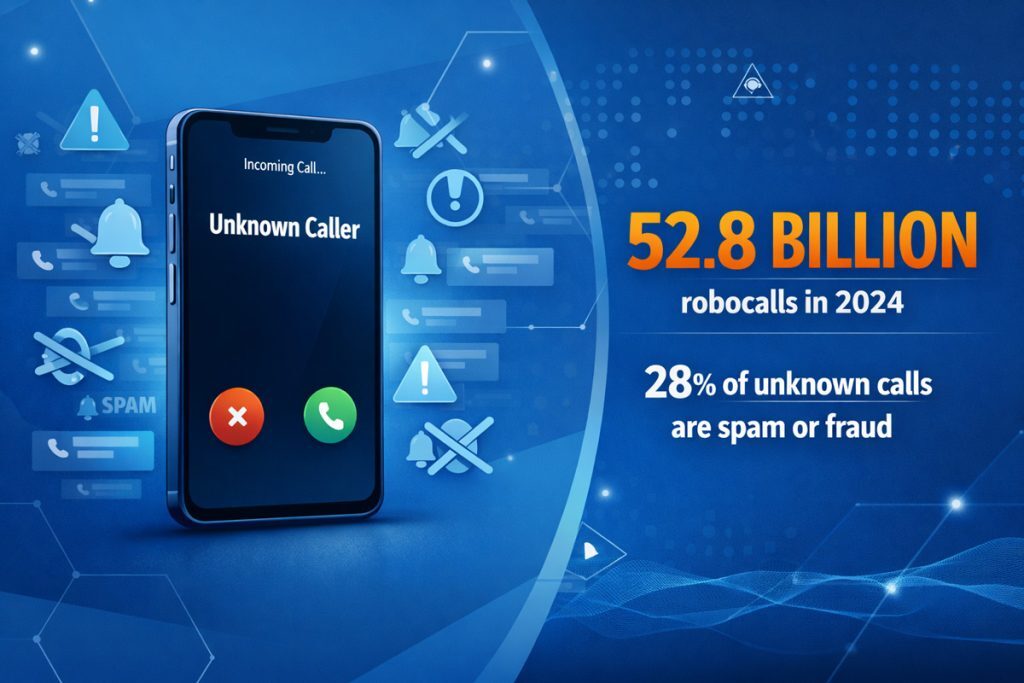
Consumers get hammered with unwanted calls. YouMail’s Robocall Index estimated 52.8 billion robocalls in 2024, which is a massive volume shaping how people react to ringing phones, and Hiya’s reporting adds another critical layer: 28% of unknown calls in 2023 were classified as spam or fraud.
When your call shows up as “unknown,” you’re being mentally compared to spam. That means nearly half your audience may be a hard “no” if they can’t tell who’s calling.
2) Carrier filtering is stricter, and trust signals matter more
Phone carriers are under pressure to stop spoofing and illegal robocalls, so they have become more aggressive in filtering and labeling.
You may have heard of STIR/SHAKEN, a caller ID authentication framework designed to reduce spoofing and enhance trust in call identity. And when identity signals improve, answer behavior can change. Verified/identity-style labels can increase user trust and answer frequency in certain contexts.
3) Lead data quality issues also compound the problem
Even the best dialer can’t fix a lead list that’s:
- Outdated,
- Poorly segmented,
- Full of duplicates,
- Missing time zone or location context,
- Heavy on numbers that are rarely answered.
When your list quality slips, your answer rate drops, and teams often respond by dialing harder, which can lead to numbers being labeled as spam or negatively impacting your reputation over time.
4) “More dials” can accidentally create “more distrust.”
When answer rates decline, teams increase activity to protect results. But high-volume dialing without smart pacing can create patterns that carriers and apps interpret as suspicious behavior, especially if calls are short, repetitive, or poorly targeted.
So, the team dials more, and the answer rate continues to dip further. The team then dials more using the same data. That loop is how outbound campaigns quietly collapse.
How to improve answer rates systematically?
Improving answer rates isn’t about one significant change. It’s about refining the small, repeatable decisions that occur every day throughout your outbound workflow. The fixes below work because they address how calls are delivered, perceived, and prioritized, not just the number of calls made.
1) Make your calls recognizable
Calls that look anonymous tend to get ignored. Using consistent caller IDs and familiar-looking numbers helps outbound calls feel more like legitimate business outreach instead of noise.
Many teams address this by utilizing systems that support local presence and caller ID control, allowing outbound numbers to match the prospect’s area code and remain consistent across campaigns. Using a calling platform like BatchDialer, which is built for high-volume teams, makes it easier to manage caller identity at scale without constantly rotating numbers or resetting trust. Over time, this familiarity alone can improve pickup rates and reduce instinctive declines. Check out the quick demo video to learn more about BatchDialer.
| Pro Tip: If your outbound results have become more unpredictable, start with a simple audit. Review the last 30 days of calling data and break down answer rates by campaign, number, and contact window. The silent killer becomes far less dangerous once you can see it clearly and put the right systems behind it. |
2) Protect phone number reputation with smarter pacing
Sudden spikes in call volume, short call durations, and repetitive dialing patterns can all signal automation. Once a number’s reputation drops, even valid calls may stop connecting.
This is easier to manage with dialers that actively monitor the health of your numbers. For example, BatchDialer tracks phone number reputation, provides the BatchDialer Remediation feature—a one-time business verification that helps strengthen caller reputation and reduce the likelihood of spam labeling, and automatically replaces flagged numbers. Together, these features help teams adjust before answer rates begin to decline.
Test your phone number reputation with a free reputation check from BatchDialer
3) Use local presence the right way
A local presence can reduce friction because the number appears familiar to the person you’re calling. When a call appears to come from the same area code, it feels more relevant and less like a random outreach.
The key is using local presence responsibly and at scale. Instead of manually assigning numbers or relying on static area codes, try using the Smart Local Presence feature on BatchDialer to automatically match the outbound number’s area code to the contact being called. This allows teams to maintain geographic relevance across nationwide campaigns without extra setup, helping calls feel more natural while avoiding inconsistent or misleading number use.
Related read: How Smart Local Presence Supercharges Cold Calling & Call Center Performance
4) Segment your lists (even basic segmentation helps)
Not all leads should be treated the same. Segmenting your lists by geography or time zone, lead source, recency, property type, or prior engagement helps reduce wasted dials and makes outreach feel more relevant. The goal is simple: fewer truly cold calls and more intentional conversations.
To do this effectively, consider using a real estate lead generation platform like PropStream, which is designed to make segmentation easier. With access to over 165 filters and 20 pre-built Lead Lists, teams can focus on motivated seller segments instead of broad, generic lists. For example, targeting failed listings allows you to reach homeowners whose properties didn’t sell previously, often a more receptive audience than cold prospects. When your lists are already segmented by situation or intent, answer rates tend to improve because the outreach feels more timely and relevant.
Pro Tip: Use PropStream filters, such as Failed Listings or Pre-Foreclosures, then layer a simple location or recency filter to improve answer rates from the first dial.
5) Run timing tests instead of guessing
Your audience has patterns, even if they aren’t immediately apparent. Instead of guessing when to call, test different call windows and track answer rates by hour and day to optimize your calling strategy. Small shifts in timing often produce outsized gains in live conversations.
Many teams discover that simply avoiding low-answer windows and leaning into proven time slots improves results without changing scripts, lists, or call volume. When timing is treated as a variable to optimize, not a fixed habit, answer rates tend to stabilize and improve over time.
Quick read: Telemarketing Best Practices for Maximum Success
6) Add multi-line dialing with guardrails
Multi-line dialing can dramatically increase live conversations, but only when it’s used with the proper controls in place. Effective targeting, healthy pacing, robust campaign settings, and strategic lead prioritization must all work in tandem. Without those guardrails, dialing faster can hurt deliverability and call quality.
That’s why teams often rely on predictive dialers, which are designed for high-volume outbound calling. For example, BatchDialer’s multi-line dialing feature allows agents to dial 3-5 numbers simultaneously, connecting only when a live person answers. Lead details appear instantly, and built-in call prioritization helps agents focus on the most important leads first. With limits on active lines and features like Rapid Fire Mode, teams can reduce idle time and boost productivity.
7) Clean your data weekly
If you’re manually updating your data, regular cleanup isn’t optional; it’s essential. Outdated data quietly destroys performance over time. A weekly routine that includes deduping records, removing invalid or disconnected numbers, and filling in missing fields helps prevent slow decay in answer rates and keeps outbound campaigns efficient.
Pro Tip: Use PropStream’s Lead Automator to automatically update relevant leads, keeping your lead lists up to date with accurate information without manual cleanup every week.
Final takeaway
Answer rates are declining because trust is declining. People are flooded with robocalls, trained to ignore unknown numbers, and backed by smarter call screening and carrier filtering than ever before.
The fix isn’t dialing more; it’s dialing smarter by improving caller trust signals, protecting number reputation, and proactively strengthening your caller identity. That’s why a systematic approach matters. When tools like PropStream and BatchDialer work in sync, one focused on finding and segmenting motivated leads, the other on delivering calls responsibly and efficiently, answer rate optimization becomes consistent instead of reactive.
Start your 7-day free trial of BatchDialer and turn more dials into real conversations.
Frequently Asked Questions (FAQs)
1) What is a “good” answer rate for outbound campaigns today?
Answer rates vary by industry and audience, but many outbound teams now see single-digit to low-teens percentages. The goal isn’t chasing a universal benchmark; it’s improving consistency and trend direction by fixing trust signals, timing, and targeting.
2) Why doesn’t dialing more solve declining answer rates?
Higher volume without smarter controls can harm your phone number reputation, trigger carrier filtering, and train prospects to ignore your calls. Over time, this creates a negative loop where answer rates continue to decline despite increased effort.
3) How does caller ID trust affect answer rates?
Calls that appear anonymous or inconsistent are more likely to be ignored. Consistent caller IDs, local presence used responsibly, and verified identity signals help calls feel legitimate, making prospects more willing to answer.
4) Can a dialer alone fix low answer rates?
No. A dialer improves how calls are delivered, but it can’t fix poor data or irrelevant outreach on its own. The best results come from pairing a high-volume dialer like BatchDialer with strong list quality, pacing controls, and segmentation.
5) How does lead segmentation improve pickup rates?
Segmented lists reduce wasted dials and make outreach more relevant. Platforms like PropStream allow teams to target motivated seller scenarios (such as failed listings or pre-foreclosures), which often result in higher engagement than broad, generic lists.
6) How often should I clean my calling data?
Minimum, weekly. Regularly removing duplicates, invalid numbers, and outdated records helps protect the number’s reputation and prevents slow, unnoticed declines in answer rates over time.