
Disclaimer: BatchDialer does not offer legal advice. This article is for educational purposes only. Consult a legal professional before cold calling prospects.
Key Takeaways:
- Cold calling can remain effective in 2026 when you prioritize high-quality leads and personalization over sheer call volume.
- Compliance with TCPA, TRACED, and carrier-level spam detection requires accurate caller ID, opt-out mechanisms, and careful call pacing to avoid spam labels.
- Success in modern cold calling depends on monitoring key performance metrics beyond call volume, such as connection and conversion rates, while leveraging tools that help you maintain a positive number reputation.
Cold calling is a tried-and-true way to reach prospects at little cost. However, cold-calling regulations and best practices continue to evolve. To set your sales team up for success in 2026, you must learn and adapt to the latest cold calling trends. Start by reading the rest of this article.
Why Cold Calling Still Works in 2026
When it comes to cold calling in 2026, sales teams must dial in on how they qualify leads, not just how many phone calls they can place.

The trick is to shift your focus away from merely maximizing call volume to capturing high-quality leads. After all, someone who isn’t a fit for your product or service is unlikely to buy, no matter how often you call them. On the contrary, someone who is already interested in what you have to offer may be infinitely more likely to make a purchase. While it’s true that cold calling can have a low conversion rate (2% according to one estimate), it can still be an effective way to reach and convert prospects when done right.
How Cold Calling Has Evolved Since 2025
Since 2025, automated telemarketing activity has surged. To protect consumers, regulators and phone carriers are cracking down on unwanted robocalls with spam labels and filters.
Unfortunately, this has also affected legitimate cold calls. To avoid spam labels, you must regularly monitor the status of your numbers. With BatchDialer, this is easy to do. BatchDialer’s platform actively monitors 10+ sources for you and automatically replaces numbers with bad labels so you can focus on what you do best: talking to prospects.
Pro Tip: Check to see if your phone numbers are marked as spam with our free Spam Checker!
Additionally, since consumers are increasingly turned off by calls perceived as random or lacking context, make sure to personalize your calling script early on.
State of Cold Calling Regulations and Compliance in 2026
These days, telemarketing calls are heavily regulated by the Federal Communications Commission (FCC). It helps enforce the Telephone Consumer Protection Act (TCPA) and the Telephone Robocall Abuse Criminal Enforcement and Deterrence (TRACED) Act.
Among other things, these laws require you to:
- Display accurate caller ID information
- Provide clear opt-out mechanisms
- Respect the do-not-call (DNC) registry
- Obtain prior express written consent before using autodialers or prerecorded messages
Keep in mind that phone carriers may have their own telemarketing standards, which, if violated, could prevent your calls from going through.
How Phone Carriers and Call Blocking Shape Cold Calling
Carrier-level spam detection and labeling systems vary, but most are triggered by unusual calling behavior. For example, if a carrier detects extraordinarily high call volume or multiple back-to-back calls from the same number, they may flag the number as a potential spam caller.
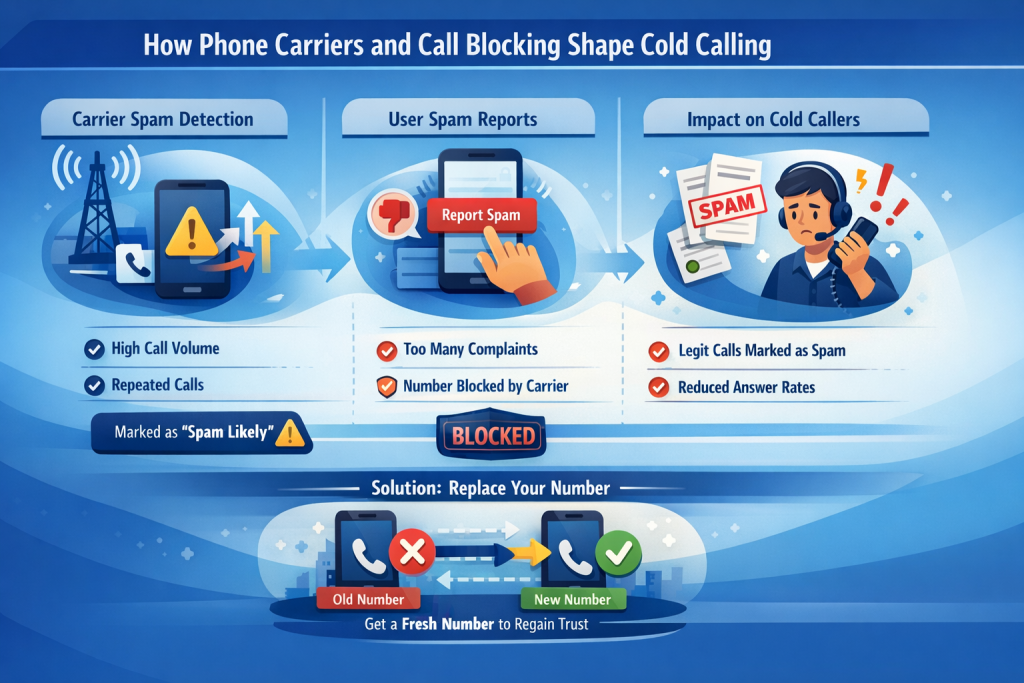
Furthermore, consumers can report phone numbers as spam to their carrier. Too many negative reports could lead to a permanent spam filter or block on that number.
Unfortunately, legitimate cold callers could still be flagged due to accidental spam reports or triggers. If this happens, it’s best to replace your number with a new one to minimize any impact on your outbound calling campaign performance.
Best Practices for Effective Cold Calling in 2026
Want to get the most out of your cold calling in 2026? Then follow these best practices:
- Focus on preparation and lead context: Don’t dial numbers randomly. Qualify leads and then learn as much about them as you can before calling.
- Manage call frequency and pacing: Rotate through numbers to avoid high call frequencies or many back-to-back calls with any one number.
- Use local presence responsibly: Local presence ID matches your phone number to the recipient’s geographic area, making them 4x more likely to answer.
Pro Tip: Maintain an appropriate dialing volume by limiting each phone number to 50-100 dials per day.
Measuring Success and Improving Performance
You can’t improve what you don’t measure. To boost your cold calling performance in 2026, track key performance indicators (KPIs) that go beyond mere call volume.
For example, monitor connection rates, conversions to appointments, and agent productivity. You can then use these insights to refine scripts, call timing, and overall outreach strategy. Over time, small changes can incrementally improve call performance to boost sales and profitability.
How BatchDialer Supports Cold Calling in 2026
Whether you’re growing a new startup or running an established business, BatchDialer can help you achieve your outbound marketing goals. Here’s how:
With predictive dialing, you can maintain steady call patterns by rotating through numbers and directing answered calls to the next available agent. Meanwhile, our local presence ID feature automatically matches your call number to the prospect’s area, so they’re more likely to pick up.
Additionally, BatchDialer offers all the reporting and analytics you need to evaluate call performance and trends. It even has an AI Suite to help you personalize conversations with real-time prompts based on sentiment analysis and other lead insights.
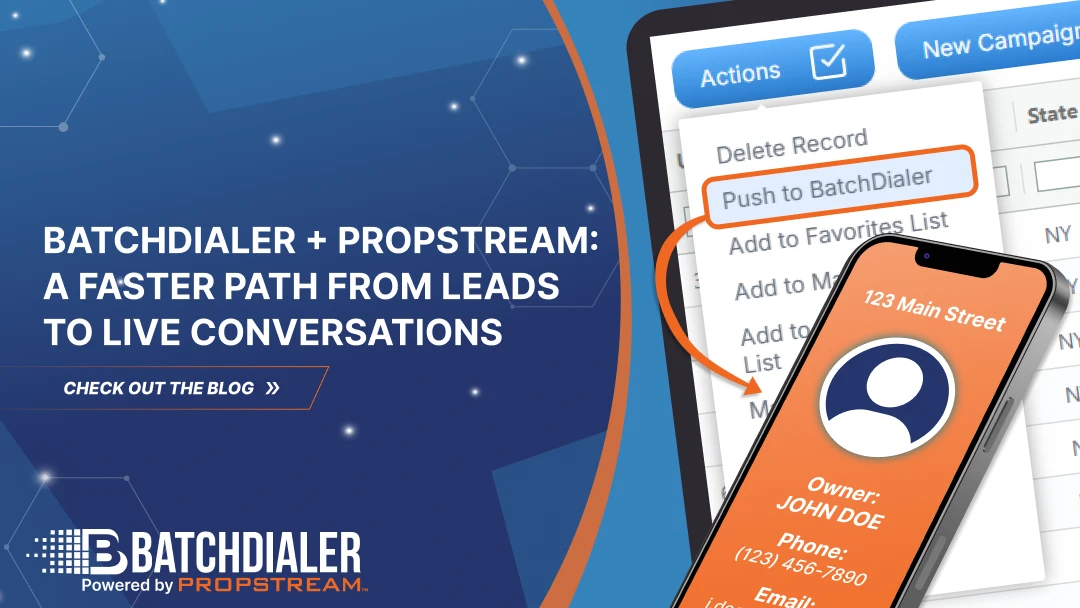
| PropStream and BatchDialer recently introduced Push to BatchDialer, a new API integration between the two platforms designed to support high-volume outbound calling. The feature connects lead research and list building in PropStream directly to calling in BatchDialer, allowing teams to move from data to live outreach without manual exports. It’s built for wholesalers, outbound sales teams, and managers who need speed, consistency, and control when running structured calling campaigns. Learn more about Push to BatchDialer and see how it fits your dialing needs at scale. |
Bottom line: Now is the time to build a cold calling strategy that works in 2026. With BatchDialer, you can scale outbound outreach while staying efficient, compliant, and performance-focused.
Start your free 7-day trial today!
Frequently Asked Questions (FAQs)
Is cold calling still effective in 2026?
Yes, cold calling remains effective in 2026 when you focus on quality over quantity, personalize your outreach, and follow compliance regulations to avoid spam filters.
What are the best practices for cold calling in 2026?
Best practices for cold calling in 2026 include qualifying leads before calling, personalizing your message early, managing call frequency to avoid spam labels, using local presence dialing to boost answer rates, and staying on top of number reputation.
Which outbound calling regulations do I need to know?
Current outbound calling regulations include the TCPA and TRACED Act, which require you to display accurate caller IDs, provide clear opt-out mechanisms, respect the DNC registry, and obtain prior written consent before using autodialers or prerecorded messages.
Are there call frequency limits I should be aware of?
While the federal government doesn’t have call frequency limits, phone carriers may. For example, if they sense extraordinarily high call volumes or many back-to-back calls from the same number, they may label your number as spam to warn customers.
Can I do high-volume cold calling without getting flagged as spam?
Yes, you can conduct high-volume cold calling by rotating through multiple numbers, pacing your calls, monitoring your number reputation across spam databases, and replacing flagged numbers quickly.
What is local presence dialing, and why should I use it?
Local presence dialing matches your phone number to the call recipient’s geographic area, making them four times more likely to answer. This increases your connection rates.
How many phone numbers should I use when making outbound calls?
It’s recommended to use enough phone numbers to keep dialing volume between 50–100 dials per phone number per day. This helps protect phone number reputation and improves call connection rates.