
Disclaimer: BatchDialer does not offer legal advice. This article is for educational purposes only. Consult a legal professional before cold calling or attempting to bypass spam detectors.
Key Takeaways:
- Phone carriers use algorithms that detect potential spam based on call patterns such as high volume, short call durations, back-to-back calls, and sudden spikes in outbound activity.
- Different carriers partner with different third-party analytics firms, which means a number flagged by one carrier may not be flagged by another.
- Maintaining normal call patterns and monitoring your number reputation can help you reduce the risk of your numbers being flagged as spam.
Cold calling has always been a numbers game; the more prospects you reach, the more deals you can close. But today, phone carriers are flagging unknown and high-volume callers as “spam” or “spam likely,” driving down answer rates before the conversation even starts.
To avoid negative labels, you must understand how carriers define spam and the types of calling behavior that tend to result in being labeled as such. Read on to learn more!
Why Spam Call Detection Exists
Let’s start with why spam detection exists in the first place.
According to the U.S. PIRG Education Fund, robocalls hit a 6-year high in 2025 after increasing 20% in one year. As unwanted spam calls proliferate, phone carriers are cracking down to protect consumers and comply with federal regulations, such as the STIR/SHAKEN protocol.
Unfortunately, however, legitimate outbound calls can sometimes be labeled as spam, so it’s important to understand what carriers mean by “spam” and how this label is triggered.
What Phone Carriers Mean by “Spam” or “Spam Likely”
There are three common types of “spam” labels: spam, spam likely, and unknown. Here’s what they each mean:
- Spam: Call is confirmed as unwanted by the carrier
- Spam likely: Call is likely unwanted (but not certainly)
- Unknown: Caller cannot be identified by the carrier
Keep in mind that carriers may have different names for some of the above categories, such as “Spam Risk” or “Potential Scam.” It just depends on the third-party analytics firm the carrier uses to generate its spam risk warnings.
Furthermore, many carriers (and independent mobile apps) allow consumers to report calls as spam. These user reports get logged in a central database, and if a phone number receives enough complaints, the carrier may label it as spam across all of its attempted calls.
The Core Signals Carriers Use to Detect Spam Calls
The algorithms that carriers (and their third-party partners) use to detect spam calls are typically proprietary, but may be triggered by:
- High call volume from single number
- Short call durations and hang-ups
- Repeated unanswered calls
- Sudden spikes in outbound activity
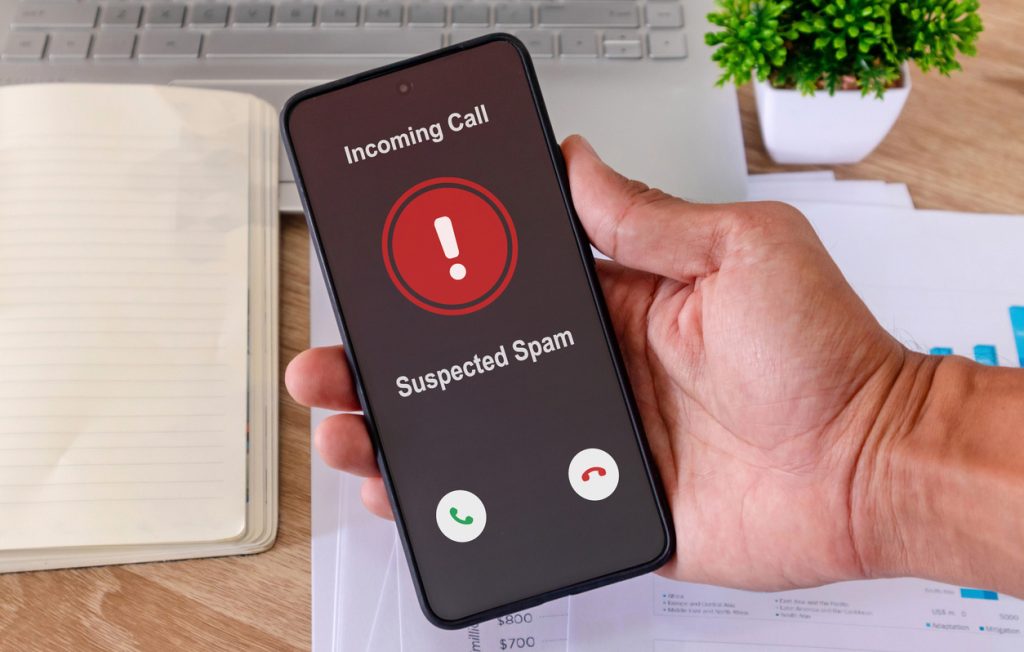
For example, if an unknown phone number makes 1,000 calls at 9 a.m. on a Monday, it may be flagged as suspicious or “spam likely.” Some algorithms even analyze phone numbers’ past calls for signs of text-to-speech technology, which is often used to make robocalls.
Call Blocking Apps and Third-Party Data Sources
Every major phone carrier uses a different third-party data source and algorithm to detect spam calls. For instance, AT&T partners with Hiya while T-Mobile partners with First Orion. As a result, one carrier may flag a number as spam while another does not.
Furthermore, independent call blocking apps like RoboKiller and Truecaller allow consumers to add another layer of spam protection on top of whatever their phone carrier filters.
The Role of Consumer Behavior
As powerful as spam detectors can be, they’re not the only obstacle to reaching leads. Some prospects actively block or report numbers as spam to their carrier. This could not only prevent you from reaching a lead but also mark your number as spam across all your calls.
Unfortunately, user spam reports aren’t even always intentional. Some users may accidentally block or report a phone number when they only mean to hang up or direct the call to voicemail.
How Call Patterns Trigger Carrier Filtering
Carriers analyze calling behavior to determine whether a number looks legitimate or spam-like. Certain patterns raise immediate red flags.
For example, several back-to-back calls from the same phone number may be perceived as spam-like behavior rather than human behavior. The same goes for high call volume in a single day and the reuse of the same number across multiple calling campaigns.
How Outbound Teams Can Reduce Spam Risk
Fortunately, there are many ways to lower your risk of receiving spam labels:
- Maintain consistent calling patterns across campaigns
Avoid dramatic swings in daily call volume. Gradual ramp-ups and steady activity over time look far more natural to carrier algorithms than sudden spikes from a single number. - Manage call frequency and pacing intentionally
Back-to-back calls from the same number, especially to unanswered lines, can trigger spam flags. Space out call attempts, rotate numbers when possible, and avoid repeatedly calling the same contact in short windows. - Monitor answer rates and call outcomes
Declining answer rates, increased voicemail-only connections, or sudden drops in live conversations can be early indicators of number reputation issues. Catching these trends early allows teams to adjust before labels appear. - Limit reuse of the same phone number across campaigns
Using one number across multiple high-volume campaigns increases exposure and risk. Distributing call activity across multiple numbers helps reduce concentration and protects overall reputation. - Use outbound tools designed for responsible and compliant calling
Dialers like BatchDialer with built-in pacing, number rotation, reputation monitoring, and compliance safeguards help outbound teams maintain healthier calling behavior at scale, reducing manual oversight and guesswork.
How BatchDialer Supports Responsible Outbound Calling
BatchDialer makes it easy to follow carrier-approved calling best practices and reduce the risk of spam labeling.
As a predictive dialer, BatchDialer intelligently paces calls based on agent availability, helping your outreach look more like natural, human behavior. Built-in number rotation prevents back-to-back calls from the same phone number, while local presence ensures region-appropriate caller IDs across campaigns.
In addition, BatchDialer actively monitors 10+ sources to ensure you always know the status of your phone numbers. If one receives a negative label, the dialer automatically replaces it. You can even check the status of your current numbers right now with our free Spam Checker tool.
Finally, BatchDialer makes it easy to stay compliant with telemarketing regulations with its automated consumer consent opt-ins and opt-outs, do-not-call (DNC) registry scrubbing tools, support for STIR/SHAKEN standards, and more.
Now that you have a better understanding of how carriers evaluate outbound calls, you’re ready to improve your cold calling performance by avoiding common spam triggers. Start today by managing your call patterns and scaling your outreach responsibly with BatchDialer.
Start your free 7-day trial now!
Frequently Asked Questions (FAQs)
How do phone carriers detect spam calls?
Phone carriers detect spam calls using proprietary algorithms that analyze call patterns such as high call volume, short call durations, repeated unanswered calls, and sudden spikes in outbound activity (often via a third-party firm).
What causes outbound calls to be marked as spam?
Outbound calls tend to be marked as spam when they exhibit suspicious patterns, such as making hundreds of calls in a short period or receiving multiple consumer complaints.
Why do some carriers label my calls as “spam likely” while others don’t?
“Spam likely” criteria vary across carriers because each provider uses different third-party data sources and algorithms for spam call detection.
How can I monitor my phone number’s reputation?
Reputation monitoring involves regularly checking your numbers against multiple spam databases and tracking metrics like answer rates and call outcomes. Some dialers can do this for you. For example, BatchDialer actively monitors 10+ sources to alert you when a negative label is applied (and then replaces the phone number for you).
Does high-volume calling always trigger carrier spam filtering?
No, high-volume calling doesn’t always trigger carrier spam filtering, but sudden spikes in call volume or suspicious call patterns can raise red flags. The key is maintaining steady, human-like call patterns by using an outbound dialer that naturally paces calls.
What’s the difference between carrier spam filtering and call blocking apps?
Carrier spam filtering is built into your phone service provider’s network, while call blocking apps like RoboKiller and Truecaller are independent apps that add an extra layer of protection. Both use different databases and criteria to identify spam.