
Get a summary of this article with your favorite AI:
Disclaimer: BatchDialer does not provide legal advice. This article is for informational purposes only. Before engaging in SMS marketing or other forms of outreach, we recommend researching applicable laws and seeking legal advice as needed.
| Quick Answer: SMS marketing laws may be getting stricter in 2027. Beyond existing TCPA and CAN-SPAM requirements, watch for proposed changes like shorter opt-out windows, mandatory two-way texting, and “revoke all” options for consumers. |
Sending marketing messages via SMS offers a direct channel to connect with prospects, though maintaining compliance with evolving regulations remains a critical consideration for businesses evaluating their outreach strategies.
Below is an overview of current SMS marketing regulations, key updates to monitor for 2027, and strategic options for managing compliance across different marketing channels.
Key Takeaways:
- SMS marketing rules are enforced by both government regulations (TCPA, CAN-SPAM) and carrier/industry standards (A2P10DLC, CTIA), so compliance means satisfying more than just federal law.
- Proposed 2027 changes could shorten opt-out windows, require two-way texting, and mandate “revoke all” options, so it’s worth monitoring regulatory updates closely.
- If SMS compliance feels too risky or restrictive, alternatives like cold calling, email, direct mail, and social media outreach can diversify your outreach strategy.
Current SMS Regulations to Know
To avoid unnecessary legal challenges, get familiar with the following telemarketing regulations currently on the books:
Telephone Consumer Protection Act (TCPA)
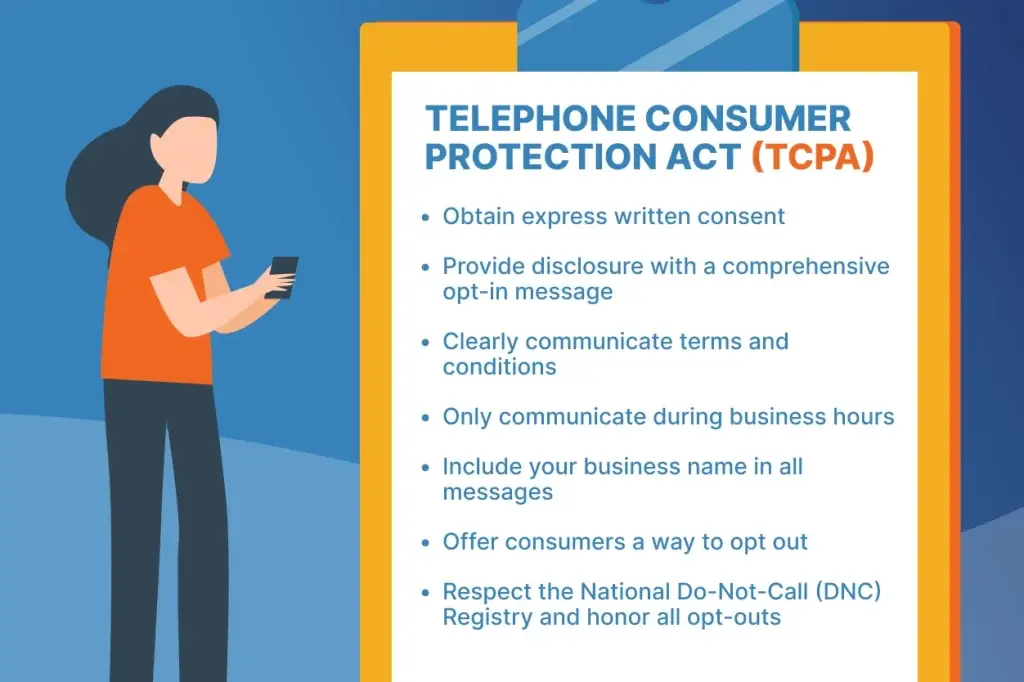
Enacted in 1991, the Telephone Consumer Protection Act (TCPA) is a federal law that regulates how businesses may contact people by phone, text, or fax. Here are some ways to help create more compliant SMS marketing campaigns:
| Obtain express written consent | You need the prospect’s express written consent before you can send them automated text messages. |
| Provide disclosure with a comprehensive opt-in message | Once you receive the prospect’s permission to text them, consider sending a disclosure message that covers the purpose of your communication, how to opt out, and more. |
| Clearly communicate terms and conditions | Prospects subscribed to your text message campaign should understand its terms and conditions and know where to find them. |
| Only communicate during business hours | Per the TCPA, businesses aren’t allowed to contact prospects outside of 8 a.m. to 9 p.m. local time. Note: Restrictions can vary by location if a specific region has stricter calling hours than the TCPA. We recommend becoming familiar with local laws. |
| Include your business name in all messages | Identify yourself in all your text communications to comply with disclosure requirements. |
| Offer consumers a way to opt out | Give prospects a way to opt out of receiving marketing texts. The opt-out could be as simple as texting “STOP.” |
| Respect the National Do-Not-Call (DNC) Registry and honor all opt-outs | It’s wise to avoid sending marketing texts to people who are on the federal DNC list or who’ve opted out of your marketing texts. |
Important note: The above information does not constitute legal advice and is intended for educational purposes, to guide business owners in creating their own marketing plan.
Government- vs. Carrier- and Industry-Led Regulations
Keep in mind that SMS marketing regulations extend beyond the government level:
A2P 10DLC Registration
A2P 10DLC stands for “application-to-person” messaging on 10-digit long codes. Phone carriers like AT&T, Verizon, and T-Mobile require businesses to register their brand with A2P 10DLC and specify the types of messages they plan to send. Unregistered texts are often blocked by the carrier and may incur charges.
Cellular Telecommunications Industry Association (CTIA)
Though not a legal requirement, many telemarketers also follow standards set by the Cellular Telecommunications Industry Association (CTIA). This industry group promotes best practices around receiving consent, avoiding rented lead lists, and immediately honoring opt-outs.
Additionally, the CTIA has a list of prohibited content that cannot be communicated via text. By not sending SMS messages that fall into these categories, you can protect your outreach campaigns from potential lawsuits.
Potential Regulation Changes to Watch in 2027

As we move into 2027, consider keeping an eye out for potential changes to telemarketing regulations.
For example, The National Law Review recently reported on proposals to reduce the time that businesses have to honor opt-out requests, require two-way texting, and require callers to offer a “revoke all” option if they intend to limit the scope of a “regular” opt-out to a single purpose.
Check your local regulations frequently to ensure you’re always in compliance.
SMS Marketing Alternatives to Consider
Of course, you’re not limited to SMS marketing. Consider exploring other marketing channels, such as the following (that may or may not adhere to the same regulations):
Cold Calling
Cold calling involves calling prospects with whom you have no prior relationship. You can identify leads and build lead lists with tools like PropStream, then launch calling campaigns with a dialer like BatchDialer.
Email Marketing
Email marketing is the practice of sending emails to prospects’ inboxes. It’s relatively low-cost and easy to scale. However, you must personalize them to avoid landing in people’s junk folders and being dismissed as spam.
Direct Mail
Direct mail refers to sending physical mail to prospects’ home addresses. This could be a postcard or a letter. However, like email, effective direct mail requires personalization, monitoring, and consistent follow-up.
Social Media Outreach
The right social media outreach can also be effective. It involves posting or sending messages to your social media followers to drum up demand for your product or service.
Pro Tip: PropStream lets you launch cold calling, direct mail, and email marketing campaigns all from the same platform. However, large cold calling campaigns are best handled by a dedicated dialer like BatchDialer.
Steps to Ensure Your Cold Outreach Stays as Compliant as Possible
Whatever outreach method you choose, follow these best practices to stay as compliant as possible:
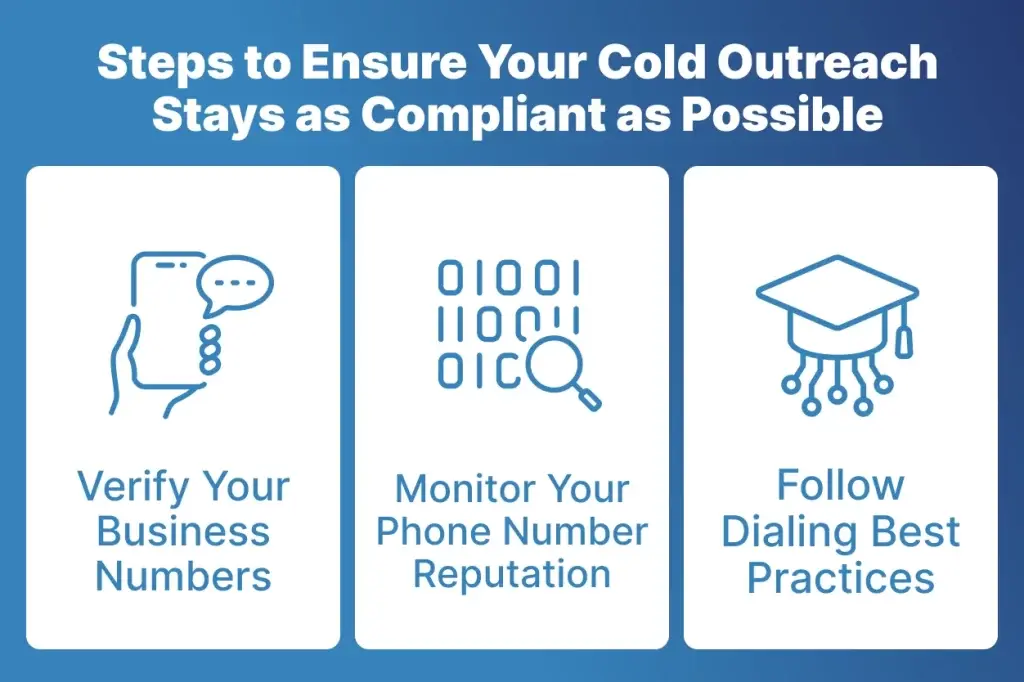
Verify Your Business Numbers
By registering your business numbers with phone carriers, you’re less likely to have your numbers marked as spam, which can hurt your answer rates. BatchDialer’s remediation feature helps register your numbers for you.
Monitor Your Phone Number Reputation
Phone carriers and consumers can mark your number as spam, making it less effective for cold outreach. Monitor your number’s reputation and replace it when necessary. BatchDialer monitors 10+ sources and replaces bad numbers for you.
Follow Dialing Best Practices
When cold calling, make sure to respect call hour restrictions for your region, vary your call frequency, and not contact those who’ve opted out or who are on the national DNC list. This can significantly improve your chances of avoiding spam flags and potential compliance issues.
Take your cold outreach to the next level with BatchDialer today.
Start your 7-day free trial now!
Frequently Asked Questions (FAQs)
What’s the biggest change in SMS marketing regulations for 2027?
Proposals reported by The National Law Review would shorten the window businesses have to honor opt-out requests, require two-way texting, and mandate a “revoke all” option for consumers. Monitor local and federal updates to stay ahead of potential shifts.
What are the main TCPA text message rules businesses must follow?
Under the TCPA, businesses must get express consent before texting prospects, send a clear opt-in disclosure, only message between 8 a.m. and 9 p.m. local time, identify their business in every text, and offer an easy opt-out (like texting “STOP”).
What is A2P 10DLC registration, and why does it matter for business text messaging?
A2P10DLC registration is how phone carriers like AT&T, Verizon, and T-Mobile verify businesses sending application-to-person texts on 10-digit long codes. Without it, your messages may be blocked or flagged, which can hurt deliverability and increase costs.
How do I keep my business numbers from getting flagged as spam?
Using verified business numbers registered with phone carriers reduces the odds of your calls or texts being marked as spam. Regularly monitoring your phone number reputation and replacing numbers that get flagged also helps maintain strong answer rates.