

Get a summary of this article with your favorite AI:
Disclaimer: BatchDialer does not provide legal advice. This article is for informational purposes only. Before cold calling prospects, we recommend researching applicable laws and seeking legal advice as needed.
|
Quick Answer: To coach a real estate calling team, measure each agent’s baseline, give balanced one-on-one feedback, refine scripts, and role-play objection handling. Then follow up to make sure the coaching sticks. |
Cold calling is a skill. Not everyone can talk to a stranger on the phone and keep them on the line long enough to make a sale or schedule a follow-up appointment. Nor can everyone take the constant rejection of “not interested” and early hang-ups.
This is why your real estate cold calling team needs training. Regular training can help them develop stronger conversation skills, handle objections more confidently, document call outcomes accurately, and improve their overall performance over time.
Key Takeaways:
- Establish a baseline for each agent through call reviews and key performance metrics like connection rate, talk time, and appointments sent before you start coaching.
- Pair balanced one-on-one feedback with script refinement and role-playing so agents can practice handling objections before they face a live prospect.
- Schedule regular coaching sessions and check recordings and metrics a week or two later to confirm the feedback actually changed behavior.
The Role of a Cold Calling Coach

As a real estate sales or call center manager, your job is to help your team constantly improve.
You can do this by inspiring team members to achieve their performance goals and teaching them how to handle rejection, objections, or other concerns in real time. The more instruction (and practice) they get, the sooner they can become stellar sales agents with high close rates.
How to Evaluate Cold Calling Performance
That said, before you start coaching, it’s important to get a baseline for agent performance.
There are two main approaches to evaluating a call agent’s performance to get a baseline (and to measure progress later): manually reviewing the quality of their calls and tracking key performance indicators (KPIs).
Call Quality Review
Listening to an agent’s call (live or after the fact via recording) can give you an immediate impression of how the agent handles conversations. Regardless of the call outcome, the tone and flow may reveal what the agent is doing well and where they could improve.
Key Performance Metrics
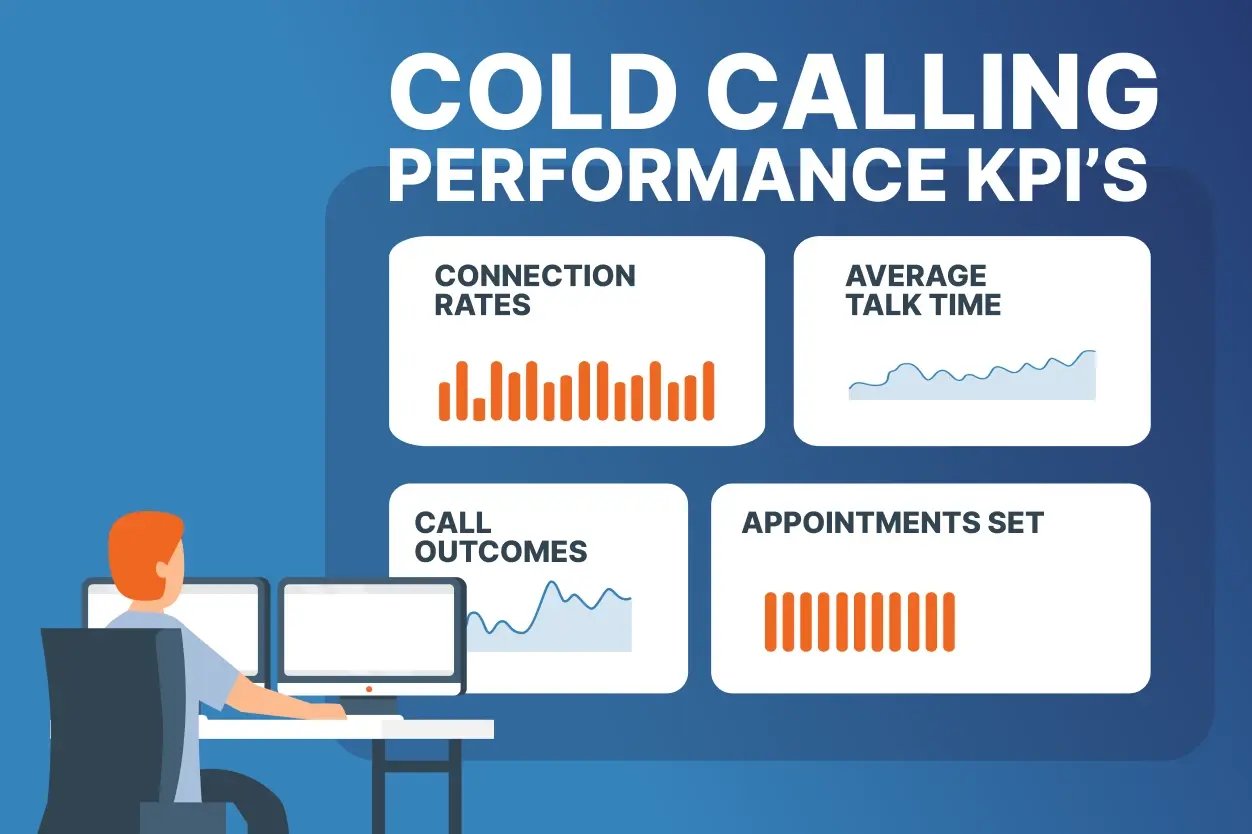
For a more quantitative approach, you can track key performance metrics, such as:
- Connection rates: This measures the percentage of an agent’s calls that connect with a live prospect.
- Average talk time: This measures the average call duration of an agent’s connected calls.
- Appointments set: This measures the number of appointments an agent sets in a given time frame.
- Call outcomes: This measures the various outcomes of an agent’s calls, including interested, not interested, no answer, etc.
Top Methods for Coaching Calling Agents
Once you have a baseline for how agents are performing, here are some ways to coach them:
Individual Feedback
One-on-one feedback is a great way to let an agent know what they’re doing well and where they could improve.
Include enough positive feedback to balance out the constructive, negative feedback. That way, the agent doesn’t come away feeling only criticized but also praised and motivated to do better.
Script Refinement
A lot of call mistakes can be remedied with a better script. So regularly review scripts and how closely agents follow them. Then make any needed adjustments to share with agents.
Even a small script refinement can make a huge difference in your agents’ performance.
Role-Playing
Finally, it’s one thing for an agent to be told what to do better. It’s another to actually practice it.
Instead of requiring agents to practice during live calls when it counts, have them role-play first.
This means pretending to be a prospect as agents pretend to call. Bring up realistic objections and demonstrate how to handle them effectively. Keep practicing until the agent gets it right.
Common Mistakes to Avoid
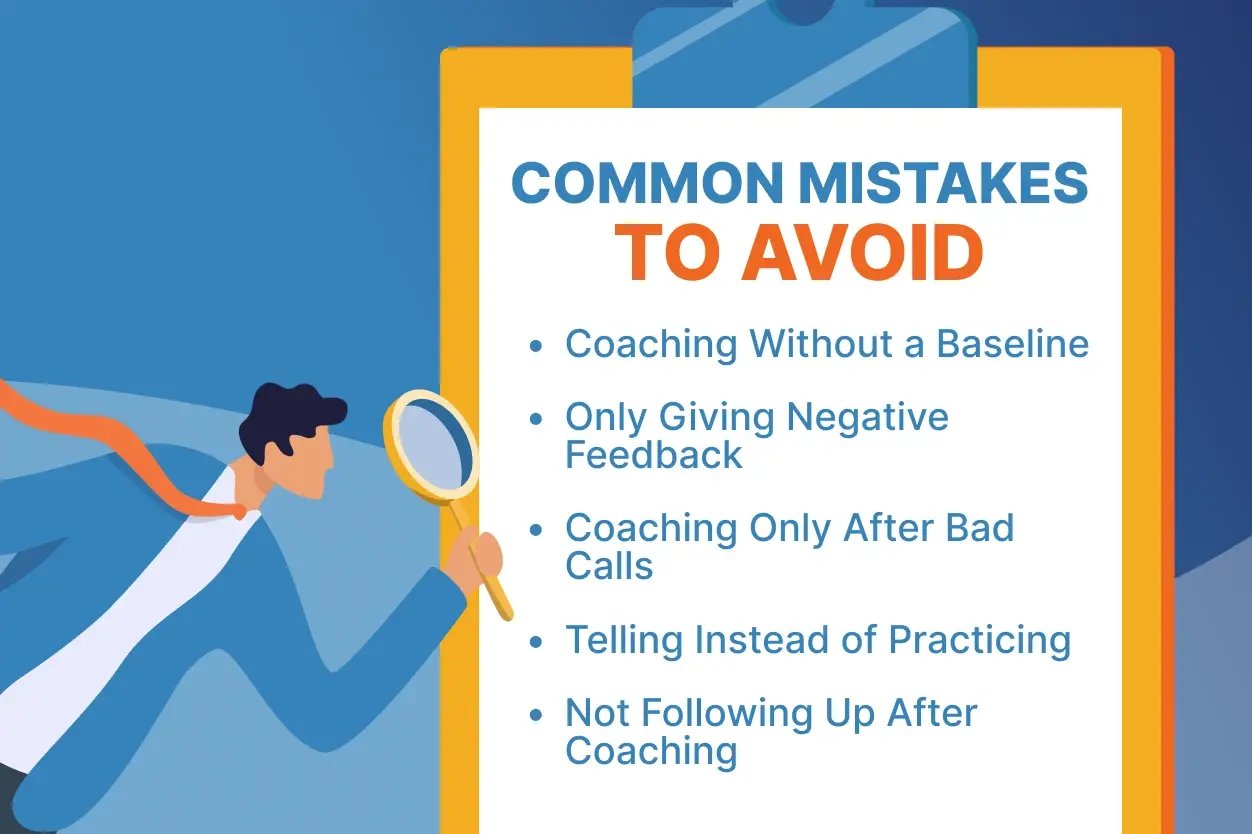
Whatever you do, avoid these common coaching pitfalls:
Coaching Without a Baseline
Giving feedback before reviewing an agent’s call recordings or key performance metrics can leave you guessing what actually needs improvement. This can result in ineffective advice.
Only Giving Negative Feedback
Agents who hear only what they did wrong can get discouraged. And in a job that involves constant rejection, maintaining good morale is crucial.
Coaching Only After Bad Calls
If you only coach after bad calls or performance dips, agents may start to dread it. Regular, scheduled coaching sessions can help cultivate a culture of learning rather than critique.
Telling Instead of Practicing
Explaining what to do differently without role-playing usually means agents have to try it for the first time on a live prospect. Plus, if you don’t role-play first, they may implement your feedback poorly because they didn’t fully understand it.
Not Following Up After Coaching
Feedback without a check-in rarely changes agent behavior. So revisit the same skill a week or two later to ensure it sinks in. Check recordings and metrics to verify that the coaching worked.
Streamline Your Coaching with BatchDialer
Fortunately, you can easily level up your coaching with BatchDialer. Our platform includes all of the following coaching features:
- Call Recordings: Every call can be recorded for easy review later.
- Customizable Scripts: BatchDialer lets you upload custom scripts for agents to follow during calls.
- Real-Time Call Guidance: Agents can receive live prompts on what to say during calls with AI-powered real-time call guidance.
- AI Call Summaries: Get an instant AI summary of each call after it finishes so you can quickly understand what was discussed.
- Listen, Whisper, Barge Features: These let coaches listen in on calls without agents or prospects hearing them, whisper to agents without prospects hearing them, or barge in on conversations with both agents and prospects hearing them.
- Live Performance Dashboards: BatchDialer includes live performance dashboards that track connected calls, average call durations, leads generated, and more, giving you instant insight into how call agents are performing.
- Agent Reporting: Run custom agent performance reports to print or share in one-on-one feedback sessions and keep for your records.
The best part is you don’t need to take a risk on BatchDialer. You can try out these coaching features for free today.
Start your 7-day free trial of BatchDialer now!
Frequently Asked Questions (FAQs)
What is cold calling coaching?
Cold calling coaching is the ongoing process of helping agents improve their phone skills through call reviews, one-on-one feedback, script refinements, and practice. The goal is to help them hold stronger conversations, handle rejection, and set more appointments.
Why is real estate cold calling training important?
Real estate cold-calling training helps agents talk to strangers with confidence, handle constant rejection, and accurately document call outcomes. Regular training also helps agents improve over time rather than plateau.
How often should I do sales call coaching?
Schedule sales call coaching regularly rather than only after bad calls or performance dips. Consistent sessions make coaching feel like development instead of punishment, and a follow-up check-in a week or two later helps the feedback stick.
What should real estate sales training cover?
Real estate sales training should cover conversation skills, script usage, objection handling, and accurate call documentation. Role-playing is especially useful because it lets agents practice before implementing the feedback with live prospects.
How do I measure progress in my cold calling team management?
Effective cold-calling team management starts with a baseline built on call quality reviews and KPIs such as connection rate, average talk time, appointments set, and call outcomes. Tracking the same metrics over time can show whether your coaching is working.
What is call monitoring and how does it help with coaching?
Call monitoring means listening to agent calls, live or via recordings, to evaluate tone, flow, and script adherence. BatchDialer’s listen, whisper, and barge features let coaches monitor calls and guide agents in real time without prospects necessarily hearing the coaching.