Disclaimer: BatchDialer does not provide legal advice. This article is for informational purposes only. Before cold calling prospects, we recommend researching applicable laws and seeking legal advice as needed.
| Quick Answer: AI voice scams are eroding consumer trust in phone calls, leading more people to ignore calls from numbers they don’t recognize. Legitimate businesses can work toward rebuilding that trust by registering their caller ID, verifying with phone carriers, following telemarketing regulations, and diversifying their outreach channels. |
Every time a scammer uses AI to fake a familiar voice, legitimate businesses suffer from a loss in consumer trust. In 2025, Americans reported $893,346,472 in AI‑related scam losses. And that’s just reported losses. The real value of losses could be much higher.
As AI scams increase, consumers understandably are more hesitant to answer calls from unknown numbers, making it harder to reach prospects. To combat this, businesses must take extra care to comply with cold-calling regulations and maintain a good phone number reputation.
Key Takeaways:
- AI voice scans cost Americans over $893 million in reported losses in 2025, making consumers far more hesitant to answer calls from unknown numbers.
- This growing distrust makes cold calling harder for legitimate businesses, but earning consumer trust can become a real competitive advantage.
- Registering your caller ID, verifying with phone carriers, and following telemarketing regulations are key steps to avoid spam labels and reach more prospects.
The Rise of AI Voice Scams
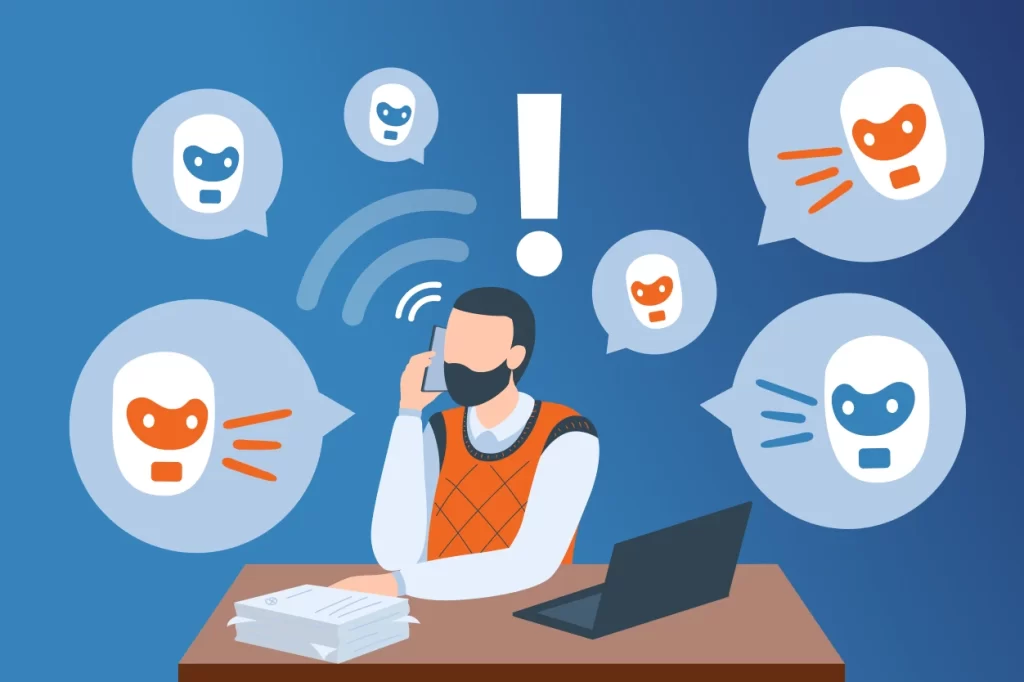
The shift toward AI-powered scams represents a major evolution in how bad actors operate, moving away from generic scripts toward highly personalized manipulation.
While traditional scammers often relied on broad tactics—like claiming you won a prize or have an unpaid tax bill—AI allows them to create a “familiar” experience by mimicking the cadence, tone, and specific vocal characteristics of someone the recipient already knows and trusts. This creates a psychological hurdle: it is far more difficult to remain skeptical when the voice on the other end sounds exactly like a colleague asking for a quick favor or a family member in need of immediate assistance.
How AI Voice Scams Are Changing Consumer Behavior
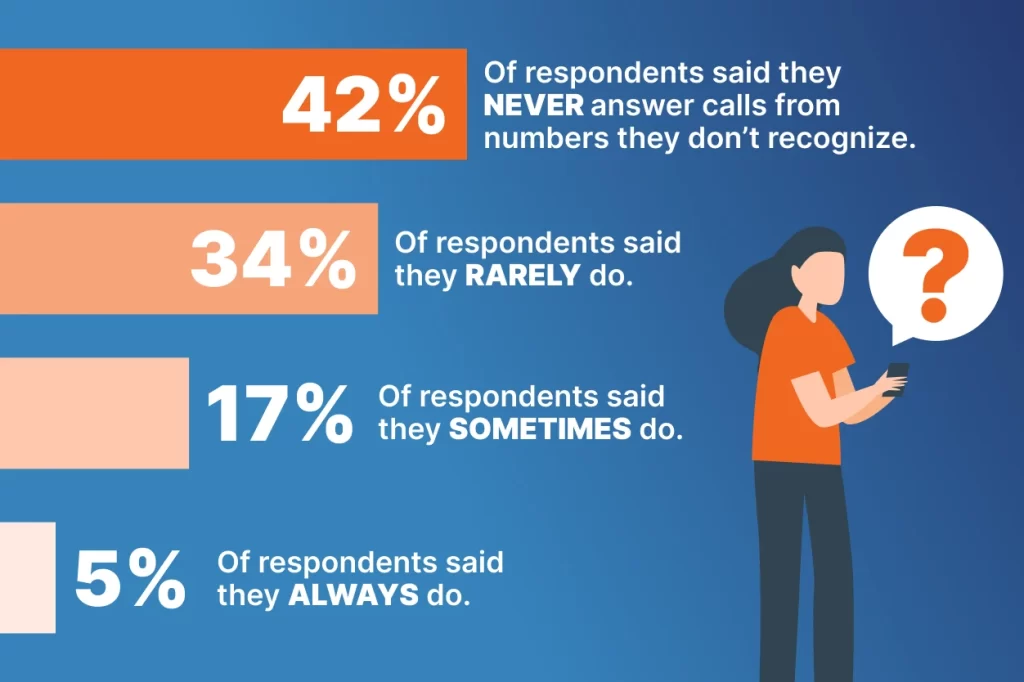
As AI voice scams become more common, more people are refusing calls from unknown numbers.
According to a recent poll, 42% of respondents said they never answer calls from numbers they don’t recognize. Meanwhile, 34% said they rarely do, and 17% said they sometimes do. Only 5% said they always do. In short, fewer people seem to answer calls from unknown numbers.
What This Means for Legit Businesses That Rely on Cold Calling
For businesses that rely on cold calling to find customers, these trends can present a challenge.
While you may have a legitimate offer to make, many prospects won’t give you a chance if they don’t already have your number saved in their phone. Even if they do, they may be more skeptical of what you have to say now that convincing AI voice scams are everywhere.
In short, earning consumers’ trust can be harder than ever. But once earned, it can also be a competitive advantage that sets you apart from other businesses, making cold-calling tools (like a reliable dialer) more vital than ever.
5 Tips for Building Trust in the Age of AI Scams
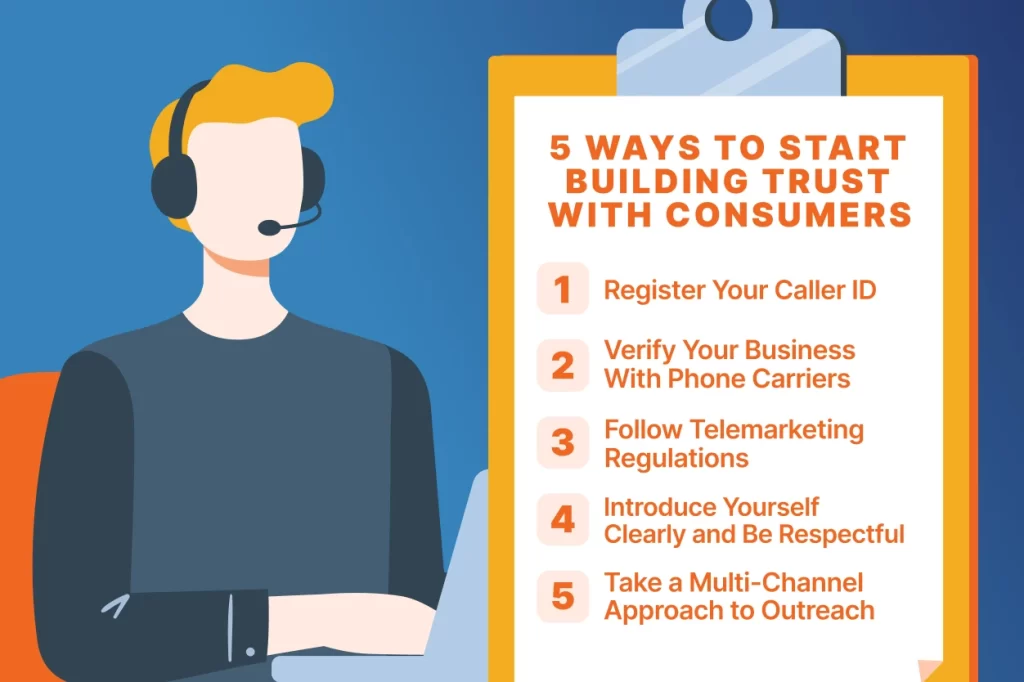
Here are five ways to start building trust with consumers in the age of AI voice scams:
Register Your Caller ID
A caller ID identifies you to call recipients before they pick up. This way, they can at least see your company name rather than a random number, or worse, a “Potential Spam” label, which helps you become more recognizable and credible.
Verify Your Business With Phone Carriers
Platforms like BatchDialer let you verify your business with phone carriers through a process called remediation. All it takes is providing some basic details about your business. Your calls are then less likely to be marked as spam or potential spam (labels that nearly guarantee your calls won’t be answered).
Follow Telemarketing Regulations
Maintaining compliance with telemarketing regulations like the Telephone Consumer Protection Act (TCPA) is another way to avoid spam labels. Here are the main requirements:
| TCPA Requirement | What It Means |
| Prior Express Written Consent | Businesses must obtain clear, unambiguous written permission before making marketing calls or sending texts. |
| Do Not Call (DNC) Compliance | Telemarketers should scrub call lists against the National DNC Registry and maintain an internal “do not call” list. |
| Calling Time Restrictions | Calls may only be placed between 8 a.m. and 9 p.m. in the recipient’s local time zone. Note: Some regions have stricter windows. To ensure compliance, it’s wise to be informed of your local guidelines. |
| Auto-Dialer Restrictions | Use of automated dialing systems or prerecorded voice messages without prior consent is prohibited. |
| Opt-Out Mechanisms | Every call, voicemail, or text should provide a clear opt-out option, and requests must be honored immediately. |
| Caller Identification Requirements | Caller ID must display accurate information, including a valid phone number and business name. Adoption of the STIR/SHAKEN protocol helps verify calls and prevent spam labeling. |
Introduce Yourself Clearly and Be Respectful
When you call a prospect for the first time, it’s important to introduce yourself and the purpose of your call. Otherwise, your call could come across as misleading and cost you the prospect’s trust.
Similarly, be respectful. Avoid using high-pressure sales tactics that could come across as too aggressive. Instead, state your purpose, ask clarifying questions, listen for the prospect’s real needs and concerns, and try to present your offer as a potential solution.
Take a Multi-Channel Approach to Outreach
You don’t have to rely on cold calling alone to reach prospects. As calls from unknown numbers grow increasingly suspect, reaching out through a variety of communication channels is often the best approach. After all, some prospects are more comfortable with texting, direct mail, or other channels. A multi-channel strategy helps you cover all your bases.
Pro Tip: PropStream Connect makes it easier to launch email, direct mail, and dialing campaigns from the same platform.
Set Yourself Apart From Scammers with BatchDialer Today
BatchDialer includes built-in tools for protecting your number reputation:
- Number reputation monitoring: BatchDialer monitors 10+ sources to ensure you always know the status of your numbers. If any receive spam labels, they’re automatically replaced.
- Business verification: BatchDialer’s remediation feature helps you verify your business with phone carriers to avoid spam labels.
- DNC list scrubbing: BatchDialer automatically removes known litigators and numbers on the federal do-not-call (DNC) list from your call queue to help keep you compliant.
By adopting these compliance tools and best practices, your calls are more likely to reach prospects. But don’t take our word for it. Try it yourself!
Start your 7-day free trial of BatchDialer now!
Frequently Asked Questions (FAQs)
What are AI voice scams?
AI voice scams (also called AI phone scams or voice phishing/vishing) use AI voice cloning to mimic a real person’s voice, often that of a family member or coworker, to manipulate victims into sending money or sensitive information. These scams rely on social engineering, using urgency and emotion to bypass a victim’s usual skepticism.
Why don’t people answer unknown phone calls anymore?
The rise in AI fraud has made consumers far more cautious about unknown phone calls in general. Since scam calls and AI-generated voice calls now sound more convincing than ever, many people simply let unrecognized numbers go to voicemail rather than risk answering a fraudulent call.
How can businesses protect their phone number reputation?
Businesses can protect their caller reputation by verifying themselves with phone carriers, registering an accurate caller ID, and following telemarketing regulations like the TCPA. These steps reduce the odds of legitimate outbound calls being mistakenly flagged as spam.
How can I build trust when cold calling?
Building consumer trust starts with transparency. Clearly identify yourself and your business, follow calling time and consent regulations, and offer an easy opt-out. Combining this with a verified caller ID and multi-channel outreach strategy (calls, email, direct mail) helps distinguish legitimate outbound calling from scam calls.